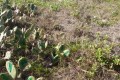
Round Island Weeding Update
Round Island is managed by Fraser Coast Regional Council. Because of the island’s close proximity to the mainland, it is frequently visited by both locals and tourists.
Two trips (26 July & 23 September 2016) have been made to Round Island this year, the first by two council officers, twelve Lower Mary River Landcare (LMRL) members and community volunteers and a group of twelve from Conservation Volunteers Australia. The second trip included council officers and volunteers with chemical spray certificates (AC/DC) as the trip targeted weeds that required chemical treatment.
These one-day weeding efforts, conducted over the last 4 years, have resulted in a highly significant benefit to this very small, coral sand island of dunal system environment. With the assistance of Juliet Musgrave, her skills and knowledge, the identification of some of the native plants (e.g. Octopus Bush) on Round Island demonstrates that this area is the overlap of vegetation zones on the coast between sub-tropical and tropical. To date, more than 30 native plants have been identified and registered, and the list grows each visit the group makes. (more…)

Happy Valley Weeding Update
This trip the focus was again on the invasive weed Abrus precatorius subspecies Africanus (Common name – crab’s eye). The control program began in March 2014, with four trips a year since then. The population was extensively established on the Northern, Western and Southern sides of the village, as well as throughout the village area. It has not been detected East of the village. The plant is a creeper/climber, and in many areas, had occupied up to 70% to 80% ground cover and extended into the canopies of trees. It seeds in all areas where it grows, and profusely when it gets high levels of sunlight exposure, such as on the dingo fence and especially where it extends into the canopy of trees.
After trialling physical removal, including attempts to dig the roots out, and cut and paste with roundup, it became very clear these methods were ineffective and, given the extent of the infestation, were completely impractical. Foliage spray was trialled with glyphosphate and starane. Both chemicals resulted in good knock down of foliage, but with starane, plants regrew from the roots. Glyphosphate (1.5% Roundup) applied with a wetting agent and a dye is the mix we now use. It is extremely effective. (more…)

In Search of the Elusive Ground Parrot
Queensland Parks and Wildlife Service rangers on K’gari (Fraser Island) recently deployed five Bio-acoustic remote listening posts purchased by FIDO (Fraser Island Defenders organisation) in swamp/heath areas across the island. These devices allow for scheduled activation times, making surveys for species with distinct calls, such as frogs and birds, easier.
(more…)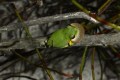
Central Station Small Mammal Survey
During the recent acoustic recorder deployment on K’gari, fellow colleague, amphibian expert and all round authority on Queensland’s plants and animals, Harry Hines joined Linda Behrendorff and Queensland Parks and Wildlife staff in an opportunity to do some small mammal capture and release in the Central Station area.
(more…)
Fraser Island (Kgari)’s Wildlife Status
It is vital that we start to gain better hard data on K’Gari’s natural resources, particularly its wildlife, to have a better picture of its natural health. This is the underlying rationale for FIDO’s initiative in sponsoring the BioBlitz based at Dilli Village from 28 November to 4 December.
John Sinclair has been visiting Fraser Island (Kgari) for more than 60 years. During that time, based on his observations, he is convinced that the populations of many once common species have declined: fish, black swans, pied oystercatchers, pipits, honeyeaters, and many other birds have declined; seeing ghost crabs is now a rarity; snake populations have plummeted; as have frogs as their place is usurped by cane toads. There is firm evidence of the decline of dugongs and the extirpation of some wildlife, such as quolls.

Collaboration in Action
The collaboration between the University of the Sunshine Coast and the Fraser Island Defenders Organisation (FIDO) developed further recently when FIDO made a $100,000 donation to the USC on 1 September to fund research into minimising the impact of vehicle traffic on the fragile natural environment of Fraser Island. The collaboration has grown over recent years from the USC sponsorship of the biennial Fraser Island conferences organized by FIDO and the forthcoming BioBlitz, to assisting the development of the Fraser Island Repository at Sippy Downs and other projects. (more…)

Conservation Versus Visitation
National parks were established in Queensland to protect the state’s natural heritage. This ethos continues to be at the heart of why protected area estates are established and managed around the world. For the past several decades in Australia, new areas for national parks have been identified and gazetted affording protection to threatened species and ecosystems. As the protected area estate in Queensland grows, so do the pressures and threats putting these unique areas at risk. In parallel, visitors in some parks are increasing, placing further pressure on park staff and infrastructure. This article explores why national parks are protected – for conservation or for visitors to enjoy? (more…)

Find a Frog in February!
Community assistance is needed to find out where our frogs are living from Burrum Heads south to Peregian and west to Conondale Range, Kilkivan and Mt Walsh. Frogs are a vital component of ecosystems and can be good indicators of environmental health. But they are in trouble world-wide due to habitat loss, pollution and disease and we need to know more about where they are. (more…)
 FINIA
FINIA 