Home » Research (Page 4)

Category Archives: Research

Fraser Island -K’gari Symposium: Sharing Knowledge, Sharing Understanding


The Fraser-K’gari Island symposium is being held at the Hervey Bay campus of the University of the Sunshine Coast on the 7-8 June 2018. (more…)

Dingoes – A highly evolved predator

There is no question that the dingo is a very capable predator.  Predators often exhibit highly intelligent and adaptable behaviour and hunting techniques to catch, subdue or kill prey. (more…)

Helping to Build the GSS Research Fund

As part of its fundraising efforts to build the Research Fund, FIDO is offering a series of Cruises in the Strait to enable people to have a personal experience of Great Sandy Strait.  (more…)

Saving Great Sandy Strait

Great Sandy Strait is already listed as a Ramsar Wetland of International Significance, but along with Cooloola, it is has been nominated for inclusion on Australia’s National Heritage list as well as the World Heritage Tentative List.  Great Sandy Strait and its natural integrity are vitally important to Fraser Island.  There is now a groundswell of public concern over the future of Great Sandy Strait if the proposed Colton coal mine proceeds, as it currently has approval to do.   (more…)

Ships Ahoy! Research to Focus on Cruise Tourism

Cruise tourism has witnessed unprecedented growth rates amidst greater interest in terms of new destinations and ships with an impressive array of features. There is some agreement within industry that the sector is likely to continue its growth trajectory given that many cruise tourists are sold to the idea of all-inclusive and value-based pricing strategies employed by many operators. (more…)
Central Station Small Mammal Survey

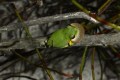
During the recent acoustic recorder deployment on K’gari, fellow colleague, amphibian expert and all round authority on Queensland’s plants and animals, Harry Hines joined Linda Behrendorff and Queensland Parks and Wildlife staff in an opportunity to do some small mammal capture and release in the Central Station area.

(more…)

Fraser Island Fauna Survey

Since departing Fraser Island 16 years ago, it was great to get back there earlier this year to renew acquaintanceships with old friends and make some new ones. I was over to assist a good friend and retired herpetologist, Harald Ehmann, to look for the endangered Fraser Island endemic, the Fraser Island Sand Skink Coggeria naufragus. I was on the island from the 8-13 February this year and Harald three days longer.

(more…)

New Research Alert!

Several papers were published recently (2016) that may be of interest to FINIA readers including a review of coastal dunefield evolution in SEQ, Ground Penetrating Radar observations in the Great Sandy National Park (including Moon Point),patterns of phylogenetic diversity in subtropical rainforests, and the diet and body condition of Fraser Island dingoes. Details and links are provided below. (more…)

A BioBlitz for Fraser Island

A BioBlitz on Fraser Island (K’gari) has moved a few steps closer to reality with FIDO setting the proposed dates for the Blitz as 28 November – 4 December 2016. However, before FIDO can launch the promotion for the BioBlitz, which is supported by FINIA, the University of the Sunshine Coast (USC) and the Queensland Parks and Wildlife Service, supplementary funding is required to engage a coordinator to liaise with scientists and other participants and retrieve the vital data collected. At this stage, FIDO is only issuing advance warning to alert people to the proposed BioBlitz event: Beach to Boomanjin and Birrabeen.

Details of Beach to Boomanjin and Birrabeen

Fraser Island (K’Gari) is inscribed on the World Heritage list because of its biological, geomorphological and aesthetic values; however, much more biological research is needed to know the extent of K’gari’s natural resources, with a BioBlitz of a discrete part of Fraser Island standing to add greatly to the ecological understanding of this site.

The BioBlitz, which is to be based at Dilli Village, aims to bring together teams of entomologists, botanists, ornithologists, zoologists, herpetologists and other specialist groups (fishes, fungi, etc.) to scour the study area.  Each team will develop its own program and modus operandi.  It is expected that the team leader will be responsible for compiling a report of the team’s findings to add to the existing data banks being built at USC.

FIDO is seeking to appoint a coordinator before this project can proceed.  The coordinator will recruit specialist scientists from a range of disciplines to study the defined research area, which covers a diversity of habitats, to develop an inventory of the natural resources and species within that area.  FIDO will also recruit volunteers as necessary to assist scientists and specialists logistically.

The study area includes samples of all six dune systems, including Dune System 4 east of Lake Birrabeen and Dune Systems 5 and 6 in the vicinity of the Boomanjin airstrip. In addition, the area includes three large perched dune lakes, two creeks and a number of old swamps, as well as various forest types.  It will be a broad transect of a wide range of ecotypes, from the beach through the foredunes and the freshwater aquatic environments of Govi and Gerrawea Creeks.  It will also enable comparison between mined and unmined areas in both the foredune and hind dune areas.  It will include the large peat swamp, with its flarks and fens, never before studied in detail.

BioBlitz study area

The proposed study area will include a diverse range of ecotypes, including all 6 dune system types

Dilli Village has accommodation for up to 60 people, as well as a large camping area and 24-hour 240V power, which may be needed for some equipment. It also has a large meeting area.  There will be opportunities at Dilli Village each night for the various teams to compare notes and share observations of their field work.

John Sinclair (AO), FIDO

Weak Links Push Migratory Birds towards Extinction

University of Queensland scientists are calling for greater international collaboration to save the world’s migratory birds, with research finding more than 90 per cent of species are inadequately protected due to poorly coordinated conservation efforts. (more…)