Home » Wildlife Management (Page 9)
Category Archives: Wildlife Management

Mibir (turtle) nesting and hatching on K’gari
Marine turtle season is coming to an end. The adult courting males and nesting females have returned to their home areas from hundreds of kilometres abroad, and hatchlings are emerging from their underground incubation period to embark on their life journey. Only 1 in 1000 make it to maturity, around 35–50 years old.
North Fraser Island (K’gari) has a small turtle rookery with a seasonal night driving curfew, where green turtles (Chelonia mydas) and loggerhead turtles (Caretta caretta) court and breed, and females deposit their precious cargo of eggs into the dunes before leaving the young to their fate. These eggs (over 70%) also provide seasonal food resources for wildlife, including dingoes. (more…)
Central Station Small Mammal Survey
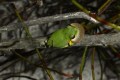
During the recent acoustic recorder deployment on K’gari, fellow colleague, amphibian expert and all round authority on Queensland’s plants and animals, Harry Hines joined Linda Behrendorff and Queensland Parks and Wildlife staff in an opportunity to do some small mammal capture and release in the Central Station area.
(more…)
Fraser Island (Kgari)’s Wildlife Status
It is vital that we start to gain better hard data on K’Gari’s natural resources, particularly its wildlife, to have a better picture of its natural health. This is the underlying rationale for FIDO’s initiative in sponsoring the BioBlitz based at Dilli Village from 28 November to 4 December.
John Sinclair has been visiting Fraser Island (Kgari) for more than 60 years. During that time, based on his observations, he is convinced that the populations of many once common species have declined: fish, black swans, pied oystercatchers, pipits, honeyeaters, and many other birds have declined; seeing ghost crabs is now a rarity; snake populations have plummeted; as have frogs as their place is usurped by cane toads. There is firm evidence of the decline of dugongs and the extirpation of some wildlife, such as quolls.

Find a Frog in February!
Community assistance is needed to find out where our frogs are living from Burrum Heads south to Peregian and west to Conondale Range, Kilkivan and Mt Walsh. Frogs are a vital component of ecosystems and can be good indicators of environmental health. But they are in trouble world-wide due to habitat loss, pollution and disease and we need to know more about where they are. (more…)
New Research Alert!
Several papers were published recently (2016) that may be of interest to FINIA readers including a review of coastal dunefield evolution in SEQ, Ground Penetrating Radar observations in the Great Sandy National Park (including Moon Point),patterns of phylogenetic diversity in subtropical rainforests, and the diet and body condition of Fraser Island dingoes. Details and links are provided below. (more…)

Tracking collars fitted to ‘high-risk’ Fraser Island dingoes in an effort to monitor their movements
The Queensland Parks and Wildlife Service has commenced a trial to track dingoes (that have shown aggressive behaviour) through the use of tracking and high visibility collars. (more…)
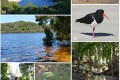
Future of an Icon: K’gari-Fraser Island, Climate Change and Social Expectations
Australasian Journal of Environmental Management, Special Issue, Vol. 22, No. 2, 2015. http://www.tandfonline.com/toc/tjem20/current#.VaxHp_mTznE
One of the papers in this Special Issue has been short-listed and two additional papers were longlisted for the annual best paper award. [Angela Wardell-Johnson, Guest Editor.]

Bear study highlights public education and physical barriers to avoid conflict
A recent study lead by Ozgun Emre Can from Oxford University may provide some invaluable lessons on reducing dingo-human conflict on Fraser Island. The study which focuses on bears suggests a number of interventions that can be used by land managers.
 FINIA
FINIA 