Home » Uncategorized (Page 3)
Category Archives: Uncategorized

Green Army Battles for K’Gari’s Natural Integrity
Work is underway in Fraser Island World Heritage area by the first 9-person Green Army team, which includes three young Butchulla men. Despite encountering hold-ups in gaining approval for overnight residence on the island, as well as delays in beginning training, the Green Army team is being kept busy with the important tasks of removing rubbish, lantana, groundsel and other weeds from the main entry road near the Wanggoolba ferry landing, and lantana control in Dundubara creek.
As they return each week as part of their six-month program, every member of the team is gaining a greater familiarity with Fraser Island (K’gari) and personally benefitting from the training and experience they are receiving. As part of their work, the Green Army team has received training in safe chemical use, as well as fencing construction and deconstruction. They have been using these new skills to contribute to K’gari’s natural integrity.
It is hoped that as the program progresses, the productivity of future teams will benefit from overcoming the challenges that any new partnership arrangement must face (especially for an area as significant as the Fraser Island World Heritage Area). In this way, we hope that the CVA Green Army teams will be an ongoing presence on Fraser Island and will be able to make an even greater contribution to weed and erosion control in some very critical areas of K’Gari.

A Little More about Pandanus Dieback
By now I’m sure the vast majority of the readers of the FINIA newsletter are aware of the Pandanus dieback occurring in Pandanus populations in South East Queensland and Northern New South Wales, and the severe dieback currently occurring on Fraser Island. Many will also be aware of the leafhopper primarily responsible for the dieback (Jamella australiae). (more…)

FINIA Members Participate in BMRG Video Case Study
How can you prove that a group is more than just the sum of its parts? This is one of the questions the Burnett Mary Regional Group (BMRG) recently posed when asked what their organisation contributes and how their sustained support can actually enhance delivery through regional partnerships? (more…)
Situation Vacant: Green Army Participants Wanted for Dream Job in Paradise!
Conservation Volunteers Australia is currently seeking six Green Army participants for their project, Restoring the balance in weed and erosion management on Fraser Island (Phase 1), commencing in late February for 20 weeks.
Participants will stay 4 days per week on Fraser Island (K’Gari) and will also be provided with all the tools, personal protection equipment and training required for each project.
If you know someone (or are) aged between 17 and 24, who is an Australian citizen or permanent resident that would like to be a part of a team that will make a real difference to the environment in our local community, please encourage them to apply.
Participants are paid an allowance while gaining skills, training and experience that can help them enter the workforce, improve their career opportunities or further their education and training.
The Green Army is an Australian Government initiative open to young people, including Indigenous Australians, school leavers, gap year students, graduates and job seekers, who are looking for employment to develop skills, undertake training and gain experience in the delivery of conservation. Local transport to the project site is also provided.
For more information or to apply, please check out CVA’s website: http://conservationvolunteers.com.au/green-army/queensland/
Submitted by Conservation Volunteers Australia
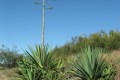
Weeds of the Month – Please keep your eyes open for these!
Inspections in Fraser Island townships continue every May and November, with great work occurring with the volunteer groups and residents.

Look out for—Sisal hemp
There are still plants being brought over from the mainland seen without any known quarantine. Please think before bringing plants to the island to reduce the potential for spreading disease and pests.
We are hoping that we have tackled most of the large broad-leaved peppers in Happy Valley, but if anyone knows of any more please let us know. This also applies with the spotting of Easter Cassia and umbrella trees in Eurong.
This work could not be achieved without all FINIA associates’ assistance. Thank you.
Sisal hemp (Local Law No. 3)
Agave sisalana
- A succulent plant from Mexico, originally cultivated for its fibre.
- Tough rosette of thick sword-shaped, smooth-edged leaves to two metres.

Native alternative—Swamp Lily (Crinum sp.)
- flowers green/yellow on a long central stem to over 5m
- Rhizomes sucker from the base and plantlets grow from flowering stem.
- found in rocky hillslopes, roadsides, beach dunes and older gardens.
- Carefully hand remove and bag when small.
- Chemical control by applying glyphosate through stem injection or cut, scrape and paint. Apply picloram and triclopyr (e.g., Access) at 1:60 mix with diesel using basal bark method (PER11463).
- Before using any herbicide, always read the label carefully and apply strictly in accordance with directions on the label.
Engaging K’Gari’s Next Generation
For those of you that check the FINIA website regularly, you may have noticed not only articles from John Sinclair, but the occasional children’s story as well.
Based around John’s experiences, the stories feature familiar landscapes, animals and even characters from Fraser Island (K’Gari), usually with a family-friendly moral or environmental message to share.
So far, on the website, you can find:
- Stowaway Antics – the story of some suburban ants who hitch a ride to Fraser Island.
- Wilflie’s War on Weeds – where Wilfie takes on Fraser Island’s woody weeds in a valley to earn money for his scout group.
- The Last Easter Cassia – where competitive mates Jacob and Herbie compete to find and remove Eurong’s last Easter cassia.
And there are more to come! Keep your eyes open over December for Happy Birthday Grandpa (about monitoring on Fraser Island), Itty Bitty and Teeny Weeny (about the Jamella leafhopper and its biocontrol agent – the Aphanomerus wasp) and Snow White – the K’Gari Bandicoot.
Submissions of children’s stories are always welcome, so if you have any stories that you would like to see published, please send them through to our Editor and Social Media Coordinator, Kellyanne Martin.
Jarvis Street Photo-Monitoring
FIDO has been weeding around Eurong on and off for decades. These efforts were initially limited to short weekend trips, which although helpful, were not cost effective. (more…)
Green Turtle Tracking at Sandy Cape
Taking advantage of turtle mating season, Aub Strydom, Peter Koch and Don and Leslie Bradley headed out to Sandy Cape over 8–15 October, laden with all the necessities for a week-long turtle-satellite-tagging trip.
Mating season provides the rare opportunity to find male turtles resting on the beach, and the team were able to tag four male Green turtles during their trip, along with one female.
Each night, the team drove the beach from Ngkala Rocks to Rooney Point, tagging every turtle they saw. The aim was to glue satellite trackers on male Green turtles, to gather information on where the males live and forage after the courting season.
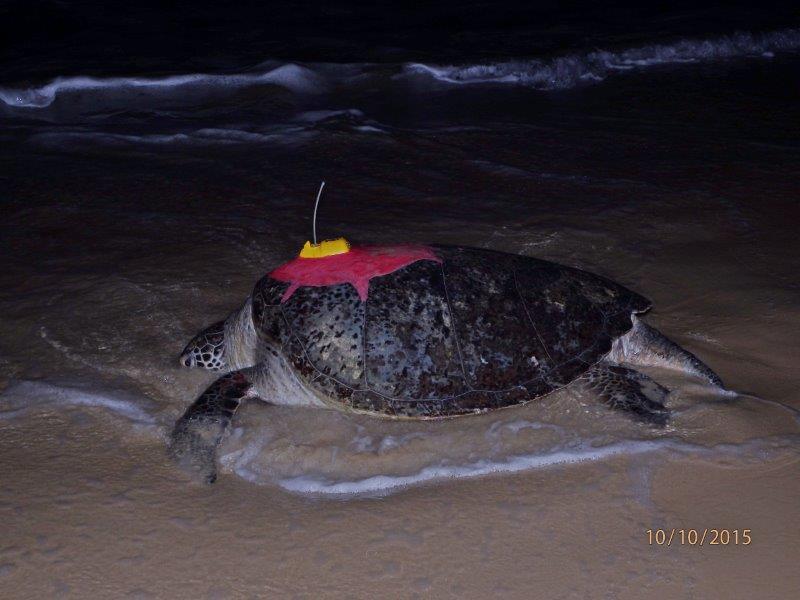
Releasing the male turtle. Glue takes 3 hours to set. (Photo Peter Koch)
The female was tagged after the team beach hauled her from the shallows. She was found with courting damage and attended by a male. This particular female was first identified and tagged as a juvenile in Moreton Bay in May 1992, and was seen again in August 1994 and September 2012 around that same region. It is thought this may be her first breeding season. Her tracking data so far suggests that she is finished at Fraser Island and could be headed to her natal/nesting beach, the location of which may be revealed thanks to this tagging.
As at 18 October, the males tagged remain close to the coast of Northern Fraser Island, likely continuing to perform their courting dance. Their post–mating season data is eagerly awaited.


Submitted by Lesley Bradley
Weeds of the Month — Please keep your eyes open for these!
Have you noticed plants in your gardens escaping and spreading into other parts of your garden or neighbourhood? You can help stop this spread by removing these invasive plants wherever you see them and planting better alternatives that benefit the garden’s diversity and reduce the possibility of weedy plants invading.
Check the health of plants before bringing them into your garden or you may spread diseases like Myrtle rust, which is now prevalent on the Fraser Coast. For further details about this rust, contact your local nursery, Council or DPI&F.
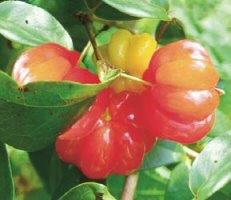
Brazilian Cherry (Eugenia uniflora)
Flowering now!
Environmental weed
Origin: South America
Dispersal: Spread by birds, small mammals and water.
Location: Found in older style gardens along foreshore and riverside areas. Often used as an ornamental garden plant.
Description: A medium shrub, with dense rounded habit. Grows 3-6m tall. Oval leaves, with pointed tips and red new growth. Succulent ribbed orange/red fruits. Forms dense stands outcompeting native plants.
Control: Control with registered herbicide like glyphosate. Cut and paste stumps within 20 seconds.

Glory lily (Gloriosa superba L.)
Environmental Weed Declared under Local Law No. 3 (2010) for Fraser Island ONLY.
Origin: Africa and Asia.
Dispersal: Spread in garden refuse and by birds.
Location: Found in bushland, coastal habitats and gardens. Tolerates nutrient-poor soils.
Description: Perennial herb with climbing stems with tendrils at the tips. The narrow shiny green leaves die off in winter, reshooting from long-lived underground tubers. Flowering occurs in October to May. The yellow, orange and red flowers have turned back petals that expose the stamens.
Control: Control by collecting and destroying seedpods, and digging out and bagging small patches ensuring tubers are removed completely. Chemical control in December and then February using glyphosate and water at 1:50(20mL/L) + Metsulfuron methyl at 1.5g/10L water (with surfactant).
Before using any herbicide, always read the label carefully and apply strictly in accordance with direction on the label.
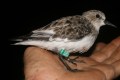
Shorebirds in Decline
In the last couple of months many of you may have noticed the increasing number of shorebirds on our coastline as the birds return from their Siberian and Alaskan breeding grounds. But how many of you have noticed that there are less than last year, and that they are declining year on year?
Australia’s migratory shorebirds are true athletes in the avian world. They spend the Australian summer with us before departing in April and May for their marathon journey north. Most stop off and feed along the Yellow Sea coast of South Korea and China before their final move to their breeding sites in northern China, or further north in Siberia and Alaska. They then return, some species flying nonstop back to join us in Australia the following summer.

Another of our region’s remarkable shorebirds, the red-necked stint. Photo taken just prior to release, after banding.
We’re fortunate to have two protected shorebird areas in our region, Moreton Bay and The Great Sandy Strait, which ensures our shorebirds are protected while they’re here. Unfortunately this isn’t the case in the Yellow Sea, where land reclamation, disturbance and reduced sediment flow in rivers are all reducing the feeding areas for our migrating shorebirds. As a result many species are declining rapidly.
Regular counts in Great Sandy show that the curlew sandpiper has declined by 46% since counting began 22 years ago, and big declines have also been recorded for other species, such as the eastern curlew. This year, both of these species were raised to a status of “critically endangered” by the Australian government, and more species will follow.
The Australian government are using count and banding data to lobby governments to better protect these birds and their habitats in Asia. However, we also have a role to play locally to ensure shorebirds have safe havens here to feed, rest and prepare for their epic northwards migration. So please play a role in helping to support our protected areas, and if you are a regular beach goer, as many of us are, when you next see these remarkable shorebirds, please just give them a little bit of distance, to prevent disturbing them.
Jon Coleman, Queensland Wader Study Group
 FINIA
FINIA 