Home » Weed and Pest Management (Page 14)
Category Archives: Weed and Pest Management

Bitou Bush Surveillance UAV trial
Bitou bush has the ability to out compete and smother native coastal dune vegetation. Infestations within the Great Sandy National Park have been dramatically reduced since the 1980’s, with only isolated plants being found in the field today.

Autumn Weed – Easter Cassia
Inspections in Fraser Island townships continue every May and November, with great work occurring with the volunteer groups and residents.
There are still plants being brought over from the mainland, seen without any known quarantine. Please think before bringing plants to the island to reduce the potential for spreading disease and pests. We are hoping that we have tackled most of the large broad-leaved peppers in Happy Valley, but if anyone knows of any more please let us know. This also applies with the spotting of Easter Cassia and umbrella trees in Eurong.

Persistence Paying Off
FIDO’s Bush Regeneration program has been operating volunteer week-long weeding operations since 2005. However, the number of weeding operations has increased progressively from one in 2005 to 10 in 2016–17. This is to keep pace with the increasing threat, and number, of weed invaders.
FINIA Meeting held on Fraser Island (K’gari)
The March 2017 FINIA meeting, which was on held on Fraser Island, provided an excellent opportunity for the members of FINIA to see first-hand the work being undertaken on the island by teams of FIDO volunteers (supported by BMRG through funding from the Australian Government’s National Landcare Programme), the Fraser Island Association [FIA], and the Fraser Coast Regional Council with the support of Queensland Parks & Wildlife Service. (more…)
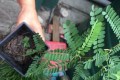
The Persistence of Abrus
One of FIDO’s many inspiring volunteers has been Peter Dorney, a nurseryman from Boreen Point. Pete was appalled by the extent and aggressiveness of the rampant Abrus he encountered during a Happy Valley working bee in March 2016. He wondered how persistent the seed might be because this is critical to how long the vigilant treatment of Abrus needs to be maintained once no more seeds are set. (more…)

Fraser Island Pandanus Rescue
Joel Fostin has launched Fraser Island’s first ever crowd-sourcing campaign. Can you help?
Fraser Island (K’Gari) has suffered catastrophic losses. Up to 50% of the east coast’s Pandanus have perished (approximately 50,000 plants). A further 20% are likely perish without intervention within the next two months. Preserving the remaining Pandanus is crucial for successful natural regeneration, and vital for the many species of wildlife that rely on them for food and habitat. The Pandanus on Fraser Island (K’Gari) need help right now. (more…)
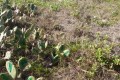
Round Island Weeding Update
Round Island is managed by Fraser Coast Regional Council. Because of the island’s close proximity to the mainland, it is frequently visited by both locals and tourists.
Two trips (26 July & 23 September 2016) have been made to Round Island this year, the first by two council officers, twelve Lower Mary River Landcare (LMRL) members and community volunteers and a group of twelve from Conservation Volunteers Australia. The second trip included council officers and volunteers with chemical spray certificates (AC/DC) as the trip targeted weeds that required chemical treatment.
These one-day weeding efforts, conducted over the last 4 years, have resulted in a highly significant benefit to this very small, coral sand island of dunal system environment. With the assistance of Juliet Musgrave, her skills and knowledge, the identification of some of the native plants (e.g. Octopus Bush) on Round Island demonstrates that this area is the overlap of vegetation zones on the coast between sub-tropical and tropical. To date, more than 30 native plants have been identified and registered, and the list grows each visit the group makes. (more…)

Happy Valley Weeding Update
This trip the focus was again on the invasive weed Abrus precatorius subspecies Africanus (Common name – crab’s eye). The control program began in March 2014, with four trips a year since then. The population was extensively established on the Northern, Western and Southern sides of the village, as well as throughout the village area. It has not been detected East of the village. The plant is a creeper/climber, and in many areas, had occupied up to 70% to 80% ground cover and extended into the canopies of trees. It seeds in all areas where it grows, and profusely when it gets high levels of sunlight exposure, such as on the dingo fence and especially where it extends into the canopy of trees.
After trialling physical removal, including attempts to dig the roots out, and cut and paste with roundup, it became very clear these methods were ineffective and, given the extent of the infestation, were completely impractical. Foliage spray was trialled with glyphosphate and starane. Both chemicals resulted in good knock down of foliage, but with starane, plants regrew from the roots. Glyphosphate (1.5% Roundup) applied with a wetting agent and a dye is the mix we now use. It is extremely effective. (more…)
New Biosecurity Act
As of 1 July, a new Biosecurity Act now encompasses the previous Land Protection Act. Focused on risk-based management and on the likelihood and consequences of the risk of spread, this broader Act will continue the management of invasive plants and animals throughout Queensland. All Queenslanders, individuals and organisations have a general biosecurity obligation to take reasonable steps to report and ensure they do not spread a pest, disease or contaminants. (more…)

National Standards for Ecological Restoration
The National Standards for the Practice of Ecological Restoration in Australia have just been released by the Society for Ecological Restoration in Australia (SERA) board’s Principles and Standards Reference group in close collaboration with partners and advisors.
(more…) FINIA
FINIA 