Home » Articles posted by finiaadmin (Page 52)
Author Archives: finiaadmin
From the Eurong nursery
Bree Jashin, Vice President FIA, FINIA Representative FIA & Alana Kippers, QPWS

New trellis at a Happy Valley property (photo by Bree Jashin)
Although growth has slowed over the colder months, plant stock is high at the Eurong nursery. There are approximately 340 plants ready for planting, 1580 plants in the shade house and 40 trays of seed in the hot house. The Fraser Island community is really starting to come on board with plant requests starting to come through from all over the Island.
The Happy Valley community is showing itself as it has taken very well to the concept of local Fraser Island plants for their gardens. (more…)
CVA Nature Wise, Scat Collection
Alana Kippers, QPWS
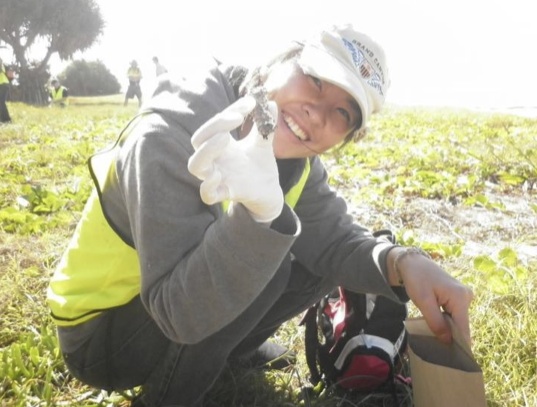
Jane, a CVA volunteer, collecting dingo scats on Fraser Island’s Eastern Beach (Photo by Jono Bateman)
The scat collection study is continuing after the first batch of scats (172) have been independently analysed.
The Conservation Volunteers, Nature Wise program commenced their second program on Fraser Island on May 15. The program had four participants, with Jono Bateman as the program leader. NRM QPWS rangers John, Gordon and Linda assisted the group in the collection of the scats and provided vital information on Fraser Island dingoes and the scat study.
Lessons from Japan on World Heritage quarantine
John Sinclair, Fraser Island Defenders Organisation

Quarantine sign (Photo by John Sinclair)
The first thing anyone notices before they enter any building in Shiretoko World Heritage area are the quarantine measures. These measures are not limited to Shiretoko. Every National Park or Ramsar Site Visitor Centre made everyone very aware of bringing pests into the protected areas they were visiting. One has to stand on a mat to disinfect the soles of one’s footwear. There are signs warning people not to carry alien seeds with them past the entry point. These very innovative ways certainly raised public awareness on the threat of invasive weeds and other pests entering the parks. (more…)
Tick Alert!
Bree Jashin, Vice President FIA, FINIA Representative FIA
Over the last two years with the damp/deluge conditions from La Niña, South East Queensland has seen the explosion in the prevalence of ticks and tick bites causing domestic animal deaths and potentially causing harm to humans.
Weed Profile – Easter cassia
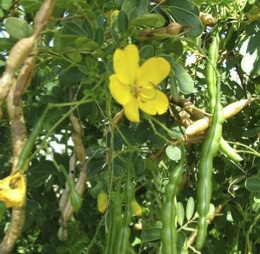
Flowering Easter cassia
Easter cassia, Senna pendula var. glabrata, is native to South America. The shrubs are easy to spot this time of year as they are in flower. This weed is not classified under the Land Protection (Pest and Stock Route Management) Act 2002, however it is classified as an environmental weed by the Fraser Coast Regional Council. (more…)
Better Beaches Training

Better Beaches participants February 2012
All FINIA members that participated in the “Better Beaches” 4WD training agreed that they took something away from the day. For Sue Sargent – the concept of allowing the engine and not momentum to get you in and out of a situation was a take home message. “Dave reminded us that if you speed into a problem, you’ll end up getting bogged. If you drive in – you can always reverse out – simple, but brilliant!” Sue added.
(more…)
Jamella treatment

Infected Pandanus at Happy Valley (photo: Bree Jashin)
Following the information workshop on Jamella last September a 2-day treatment and control working bee was set up by FIA/FINIA. Four FCRC Parks and Gardens staff, two QPWS volunteers, one FIA member/volunteer and two QPWS staff inspected and injected almost 40 plants on private land and road reserve and over 200 plants on Parks land. (more…)
Myrtle Rust

Myrtle rust on Rhodamnia spp. foliage. (Photo: Courtesy of Biosecurity Queensland)
Myrtle rust is a fungal disease that affects plants in the Myrtaceae family (including eucalypts, bloodwoods, bottlebrushes, paperbarks, tea trees, lilly pillies and water gums). The disease is spread by wind, human activity and animals. (more…)
Dingo Scat Collection
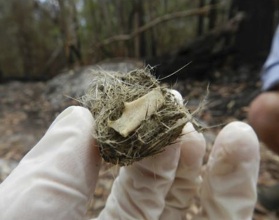
Dingo scat containing bone (photo: Alana Kippers)
Stage III of the dingo population study started in September with QPWS staff collecting dingo scats. The first formal collection was conducted from 21 – 24 November 2011 with the Conservation Volunteers Australia Nature Wise Program. (more…)
Better Beaches Training
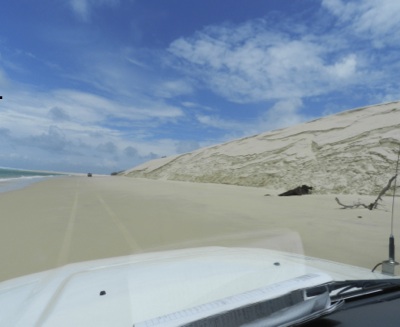
Photo: Alana Kippers
This project builds on a previous initiative conducted by the Burnett Mary Regional Group and CQ University in 2007-8 to develop a Code of Practice for 4WDs on foreshores (primarily to protect turtles and shorebirds).
The Code was a highly successful engagement tool developed by regional 4WD clubs and non-club 4wders. The activity also empowered the participants with a new function, that of stewardship for the natural resources that they enjoy in this popular pastime. (more…)
 FINIA
FINIA 