Home » 2016 (Page 3)
Yearly Archives: 2016
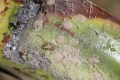
A Little More about Pandanus Dieback
By now I’m sure the vast majority of the readers of the FINIA newsletter are aware of the Pandanus dieback occurring in Pandanus populations in South East Queensland and Northern New South Wales, and the severe dieback currently occurring on Fraser Island. Many will also be aware of the leafhopper primarily responsible for the dieback (Jamella australiae). (more…)

FINIA Members Participate in BMRG Video Case Study
How can you prove that a group is more than just the sum of its parts? This is one of the questions the Burnett Mary Regional Group (BMRG) recently posed when asked what their organisation contributes and how their sustained support can actually enhance delivery through regional partnerships? (more…)

Situation Vacant: Green Army Participants Wanted for Dream Job in Paradise!
Conservation Volunteers Australia is currently seeking six Green Army participants for their project, Restoring the balance in weed and erosion management on Fraser Island (Phase 1), commencing in late February for 20 weeks.
Participants will stay 4 days per week on Fraser Island (K’Gari) and will also be provided with all the tools, personal protection equipment and training required for each project.
If you know someone (or are) aged between 17 and 24, who is an Australian citizen or permanent resident that would like to be a part of a team that will make a real difference to the environment in our local community, please encourage them to apply.
Participants are paid an allowance while gaining skills, training and experience that can help them enter the workforce, improve their career opportunities or further their education and training.
The Green Army is an Australian Government initiative open to young people, including Indigenous Australians, school leavers, gap year students, graduates and job seekers, who are looking for employment to develop skills, undertake training and gain experience in the delivery of conservation. Local transport to the project site is also provided.
For more information or to apply, please check out CVA’s website: http://conservationvolunteers.com.au/green-army/queensland/
Submitted by Conservation Volunteers Australia

Fraser Island to Benefit from Commonwealth Funding for Green Army Projects
The Fraser Island Defenders Organization has been provided with funding as Project Host as a result of Green Army funding for two projects from the Department of Environment and Heritage. The service provider for these projects will be Conservation Volunteers Australia.
The project, Restoring the balance in weed and erosion management on Fraser Island, will commence in late February and again in mid-August and run for 20 weeks. The six participants will range from 17 to 24 years old, and will be provided with training, including Occupational Health and Safety, First Aid, chemical use and the management of small motors. They will gain hands on skills in weed management, erosion control and will be fortunate to have advice and information from the QPWS rangers who will direct the work plan.
The participants will have their training at Hervey Bay and spend four days a week on Fraser Island working on different parts of the island. Other potential work may include:
- Easter Cassia management around Happy Valley and south to Yidney scrub
- Jamella – egg raft collection (and wasp release if training were provided), monitoring and leaf stripping
- Giant Rat’s Tail Grass control
- Eurong nursery – plant propagation and re-potting, including of Pandanus
- Great Walk track maintenance
- Track building
- Site stabilisation through erosion control and weed management on Indian Head (Takky Wooroo).
The project provides a unique opportunity to have work carried out on Fraser Island over the period of a year that would possibly take many years otherwise.
The team will work with a number of different groups on the island, including the Butchulla people, to learn about the culture and management of the island.
Libby Gardiner, Regional Manager Southern Queensland, CVA
Propagating Natives instead of Weeds
Since Fraser Island’s World Heritage nomination was prepared 25 years ago, the number of identified weeds has grown from 40 to 200. Most of the additions to the weed list are garden escapees or alien grasses and pasture plants.
Most of these alien grasses and pasture plants have arrived on K’Gari as hitchhiking seeds stuck in the under-bodies of vehicles that haven’t been cleaned adequately before going to the island, or in the luggage and freight brought inside those vehicles by island visitors. This is evident by the fact that the epicentres for the invasion of almost all of the grasses and pasture plants, such as Green Panic and Siratro, are in the township or camping reserves. By diligence, we are whittling away at these weeds that arrived essentially as stowaways.
A more difficult challenge is countering the weeds that were deliberately taken to Fraser Island as garden plants. Landholders sought to establish hardy plants that could thrive on the island with little care or attention when they were absent for long periods. Thus they came up with a group of plants that were ideal to survive if they got loose in the Fraser Island bush. Roses and many of the more classic garden plants just can’t survive on Fraser Island. However, garden plants like Clivias, Coral Creeper, Singapore Daisy, Easter Cassia, Mother-in-Law’s Tongues, Glory Lily, Mother of Millions and Fish-bone Ferns, which looked attractive around the houses and required little care, all escaped their garden enclosures and ran riot on the island. Because these plants are so hardy they are now very difficult to eradicate.

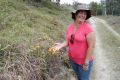
Coolum-based volunteer, Suzanne Wilson, gathering seed for the Eurong QPWS nursery. These are attractive plants that can be grown by Fraser Island landholders
Landholders are being encouraged to plant and cultivate attractive native plants. However, sourcing those plants has been a major problem. The Queensland Parks and Wildlife Service has a nursery, but lacks the staff to operate it as a supplier of plants on demand to landholders who are told not to take any plants at all onto the island.
Now, as another FINIA collaboration, FIDO and the Fraser Island Association are building up a stock of plants to entice landholders to opt to grow natives that are grown from seed collected on the island, and which, with a little tender loving care to establish them, can do just as well as the weeds we are working to eliminate. As well as purchasing pots and other nursery supplies, FIDO has been scrounging cleaned used pots and recruited a very experienced seed collector to help build up the nursery.
The resorts at Eurong and Happy Valley have set the tone by purging their properties of weeds and establishing wonderful rich gardens of natives. FIDO is prepared to cooperate with other landholders to replace exotic plants with plants from the Eurong Nursery as part of a long-term strategy to reduce weeds on Fraser Island.
John Sinclair (AO), FIDO
K’Gari’s Six Dune Systems
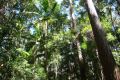
In this FIDO Backgrounder, rhyme describes the nexus between K’Gari’s soil formation and vegetation types.
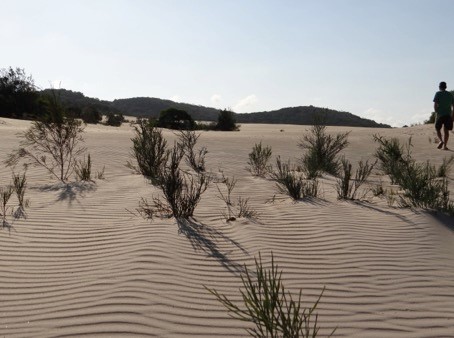
Dune System One/ The soil has just begun/ With A and B little or none/ And the ecosystem is underdone.
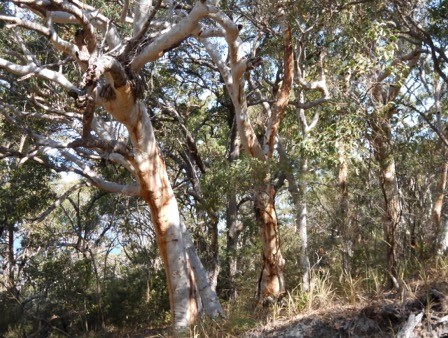
Dune System Two/ B’s got a darker hue/ Eucalypts are now in view/ But soil development has much to do.
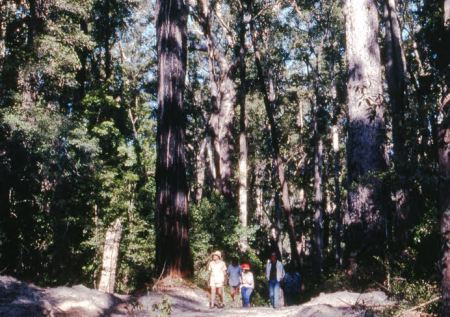
Dune System Three/ Has many a Blackbutt tree/ Richer horizon B and nutrients the key/ The forest resulting is grand to see.

Dune System Four/ Gets the highest score/ B horizon is further below the floor/ It supports rainforests and much more.
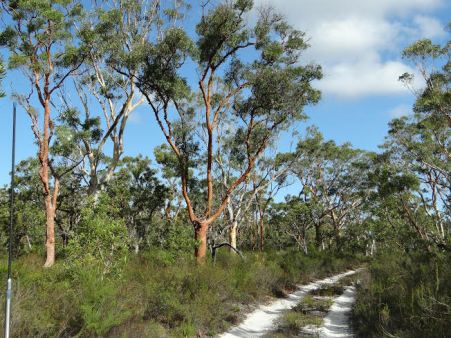
Dune System Five/ The ecosystems losing its drive/ Tall trees shrink just to stay alive/ Roots can’t reach the B, though they strive.
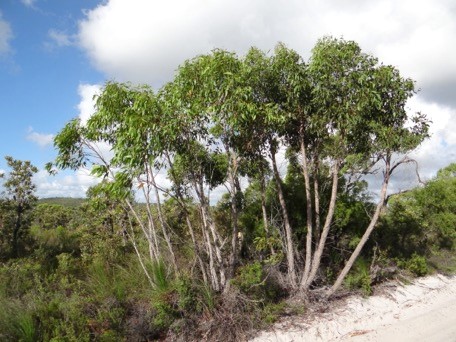
Dune System Six/ The ecosystem is in a fix/ Tall trees have turned into Mallee sticks/ Reaching deeper nutrients defies all tricks.
John Sinclair (AO), FIDO
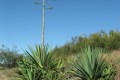
Weeds of the Month – Please keep your eyes open for these!
Inspections in Fraser Island townships continue every May and November, with great work occurring with the volunteer groups and residents.

Look out for—Sisal hemp
There are still plants being brought over from the mainland seen without any known quarantine. Please think before bringing plants to the island to reduce the potential for spreading disease and pests.
We are hoping that we have tackled most of the large broad-leaved peppers in Happy Valley, but if anyone knows of any more please let us know. This also applies with the spotting of Easter Cassia and umbrella trees in Eurong.
This work could not be achieved without all FINIA associates’ assistance. Thank you.
Sisal hemp (Local Law No. 3)
Agave sisalana
- A succulent plant from Mexico, originally cultivated for its fibre.
- Tough rosette of thick sword-shaped, smooth-edged leaves to two metres.

Native alternative—Swamp Lily (Crinum sp.)
- flowers green/yellow on a long central stem to over 5m
- Rhizomes sucker from the base and plantlets grow from flowering stem.
- found in rocky hillslopes, roadsides, beach dunes and older gardens.
- Carefully hand remove and bag when small.
- Chemical control by applying glyphosate through stem injection or cut, scrape and paint. Apply picloram and triclopyr (e.g., Access) at 1:60 mix with diesel using basal bark method (PER11463).
- Before using any herbicide, always read the label carefully and apply strictly in accordance with directions on the label.

Call for Survey Takers – Iconic Dingo Project
The University of the Sunshine Coast’s DSITIA-funded ‘Iconic Dingo project’ is very keen to secure the views and perspectives of all FINIA members as they finalise the data-gathering stage of their project. Essentially we are a small team of humanities and social science scholars who are exploring how different stakeholders perceive the dingo and the stories they hold. (more…)
Eurong’s New Nature Trail
A comprehensive Site Visitor Capacity Study in 2008 identified Eurong as the most visited site on all of Fraser Island (K’Gari). It is the main hub for all the island’s visitors. This is one of the motivations for FIDO’s intensive efforts to improve the natural integrity of this very important site by controlling the weeds. It is why FINIA chose Eurong as the site for the Demonstration Garden Project, which aims to encourage landholders and residents to grow plants native to Fraser Island on their lots rather than propagating and spreading alien plants, many of which have turned into weeds.
In 1963, prior to any National Park being created on Fraser Island, over 250 hectares of Eurong were set aside as a township reserve. None of this reserve, which extends 1.6 kms inland with a 1.6 km beach frontage, is included in the Great Sandy National Park. The National Park Ranger Station is not part of the township reserve. Some remarkable natural features of the township reserve include wetlands and sandblows and a diversity of ecosystems. Preserving Eurong’s natural integrity is critical to the natural integrity of the National Park that surrounds it on three sides.
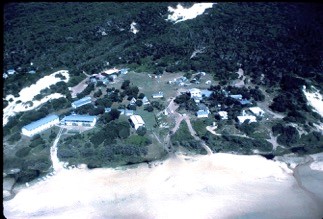
Eurong 1985. FIDO’s interpretative Nature Walk covers what was three decades ago an active sandblow (see white patch at the left of the photo). This former sandblow is now in the process of colonisation by vegetation. FIDO will be interpreting the vegetation and landscape between the Resort and the houses of Residential Valley
Between the two valleys, one of which is occupied mainly by the resort site and the residential valley where most of the village’s houses are located, are the remnants of sandblows that were very active when the village was surveyed in 1963. After getting on top of the weeds in this Unallocated State Land, FIDO is embarking on an ambitious and most interesting project to establish an interpreted nature walk that describes the connection between climate, soil and vegetation. This will help visitors and residents to better understand the vegetation patterns and how they are largely related to soil development.
The interpretation on this fascinating easy 10 to 20-minute stroll explains one of the keys to understanding the development of the diversity of Kgari’s vegetation patterns. The impact of sandblows on Melalueca growth will be a special feature of the walk, which shows entombed and exhumed Melaluecas that may be thousands of years old.
John Sinclair (AO), FIDO
Fraser Island Umbrella Organisation Turns Ten
In late 2005, a small group of dedicated people spent two days visiting weed sites on the internationally significant Fraser Island World Heritage Area in a workshop facilitated by the Burnett Mary Regional Group. The group consisted of land managers – Queensland Parks and Wildlife Service (National Park), the Department of Natural Resources and Mines (Unallocated State Land), the local council, the Cooperative Research Centre for Weeds, the National Parks Association of Queensland, Fraser Island Defenders Organisation and Sandy Cape Lighthouse Conservation Association as well as Butchulla participants Malcolm Burns, Jo Jo Gala and Marie Wilkinson.
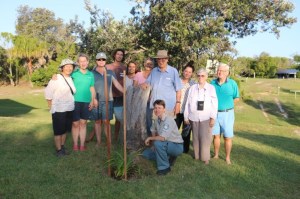
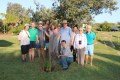
FINIA partners gathered recently at Dilli Village to celebrate a successful 10-year partnership to help protect and restore Fraser Island’s natural assets
After those two days, it was clear to the group that weeds were just one of many issues threatening the Outstanding Universal Value of this UNESCO-listed site. Following the workshop, the Fraser Island Natural Integrity Alliance (FINIA) was formed with a goal to protect and restore the island’s natural integrity. The FINIA team developed an action plan that provided a framework for ongoing cross-tenure collaboration among the group’s participants and project partners.
Work commenced on addressing the issue of the spread of ‘garden escapees’ around the townships of Eurong and Happy Valley and the historic Sandy Cape Lighthouse that quickly became invasive weeds in the adjoining National Park. In addition to on-ground work to control weeds like mother-in-law’s tongue, Easter cassia, abrus and asparagus fern, FINIA partners also conducted workshops and awareness-raising campaigns to increase awareness and understanding of the damage these non-native, invasive weeds can cause to the island’s unique ecological environments.
As the partnership grew, so did the dedicated effort by group participants and their volunteers. FINIA collaborators ‘branched off’ to lead several other initiatives, including native seed collection; propagation and revegetation (starting with ‘Plant me instead’ replacement programs); pest management of the Jamella pandanus leafhopper and cane toad; marine debris clean-ups; research to address fire, dingo management and increase the knowledge of the island’s unique patterned fens and swamp orchids; erosion and rainfall monitoring; education and awareness (with a newsletter, website and Facebook pages); and cultural heritage mapping in conjunction with the Fraser Island World Heritage Area Indigenous Advisory Committee (which won the Queensland Landcare Award 2015 for Indigenous Land Management).
Members of FINIA gathered on the island recently to celebrate 10 years of collaboration and to review the group’s achievements—enjoying some generous sponsorship by the University of the Sunshine Coast. Mr John Sinclair AO, a long-standing advocate for Fraser Island, said that after 10 years, it was a good time to reflect and plan the next decade, with a recent workshop held at Dilli Village, where it all began. ‘FINIA provides a great vehicle to get things done. It’s overcome a number of issues that hampered on-ground work in the past, but also ensures that we all communicate more effectively’, said Mr Sinclair. ‘FINIA is the catalyst that holds us all together and makes things happen’, added Butchulla elder, Glen Miller. ‘Without FINIA, it’s unlikely that we would have been able to achieve the success we have and the range of projects that FINIA now supports’.

FINIA members observe release of the Jamella biocontrol on a Fraser Island Pandanus
The BMRG’s Conservation Partnership Manager and current FINIA Chair, Sue Sargent, was a participant in the original workshop. ‘FINIA has been an incredible vehicle for the World Heritage Area and thanks to the support of the island’s land managers Queensland Parks and Wildlife Service and Fraser Coast Regional Council, continues to thrive, picking up awards along the way’. ‘In 2011, the model was even showcased at an international conference as “the key to successful holistic weed management on Fraser Island” by Dr Alison Shapcott from the University of the Sunshine Coast—where it attracted considerable attention’.
Looking forward, although the environmental problems continue to grow, so does the strength of the partnership, with 15 partners now part of the group. FINIA’s success to date is a great example of how a supported and engaged groups of stakeholders can work together to genuinely address long-term land management issues. And as for what the next decade may hold? Well aside from more work with weeds and pests, education and awareness, FINIA is currently planning a BioBlitz to be held in 2017.
FINIA would like to formally acknowledge the Australian Government’s National Landcare Programme, the University of the Sunshine Coast (catering sponsors) and Kingfisher Bay Resort Group for their support of our tenth anniversary event.
Chris Stone, BMRG
 FINIA
FINIA 