Nest Relocation Review – 2022-23
During the 2022-23 nesting season between 24 November 2022 and 15 February 2023, 61 loggerhead and 2 green clutches were relocated to the 5 cages. All emerged clutches had been dug out and counted by April 18 with the results that 8,212 eggs were relocated, and 6,351 hatchlings were produced (a hatching rate of all clutches was 77.3%). The average for the five clutches that were relocated within 48 to 72 hours after nesting was higher at 86.3% demonstrating again that the group’s careful handling techniques are effective. Sadly, two clutches partly predated by Wongari (dingoes) had a very poor success rate (23.6%) this season.
Satellite Telemetry Program
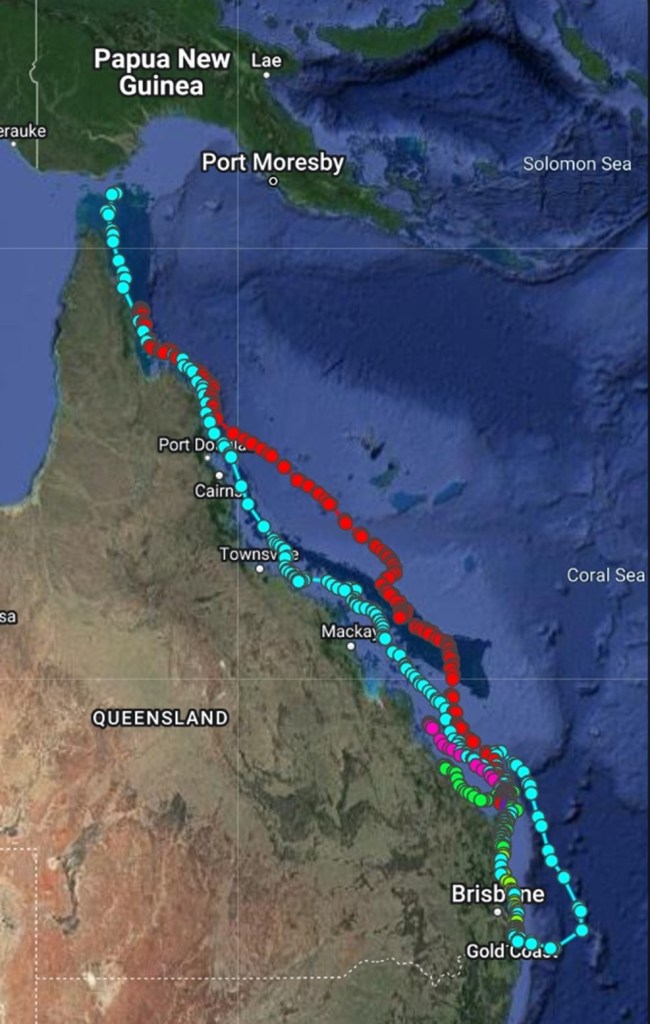
The Sandy Cape Satellite Telemetry Program supports GSMP zoning, with tracking commencing in 2015. Since that time, 47 satellite trackers have been attached to: 21 green males, 1 loggerhead male, 11 green females and 14 loggerhead females. Habitat use data collected has been used to support the go-slow and trawl-free protection for the turtles provided by the Great Sandy Marine Park zoning plan.
In the 2022-23 season, five nesting loggerheads, and three foraging male greens were given satellite trackers, partly funded by $20,000 from the MRCCC (Mary River Catchment Coordinating Committee). One has a foraging home to the south, near the Tweed River where one of our previously tracked turtles, Olga Wandi went 3 years ago. Olga Wandi was also here nesting again this season.
Three of the nesting loggerheads went north and settled on reefs – one off eastern Cape York, the second near Yeppoon in Rodds Bay, south of Gladstone, and the last one is still migrating northwards and is currently north of Port Douglas, after first visiting the Gold Coast. Her track there, via the deep ocean, is visible on the map.
Article contributed by Don and Lesley Bradley, Sandy Cape Turtle Monitoring Program
 FINIA
FINIA 