Recent media attention highlighted the wongari breeding season and high-risk wongari-human interactions in the Waddy Point and Eli Creek visitor areas on K’gari.
A collaborative education and monitoring campaign by QPWS and BAC community rangers saw increased patrolling across these areas. Working extended hours, patrolling rangers provided visitor education on dingo-safe behaviour, addressed high-risk behaviours, and monitored wongari activity and movements. The focused and united front presented between QPWS and Butchulla demonstrated a greater emphasis on collaborative wongari conservation and risk mitigation required during this high-risk period. Unfortunately, some people persist in ignoring the ‘Be dingo-safe!’ messages, increasing the risk for all visitors and the wild wongari population.
To assist in this challenging situation, the K’gari Wongari Management Team utilised GPS tracking collars on select individual wongari as part of risk mitigation. The tracking activity was enacted with collaborative approvals after one child was bitten leading into the busy Easter holiday period, and another person was nipped in the Eli Creek day use area. Wongari involved continued to display threatening behaviour over the days following these high-risk interactions.

The tracking activity saw identified wongari safely captured, ear-tagged and fitted with a GPS collar to assist management actions as per the FIDCRMS (strategy). The collar regularly detects a GPS location, automatically uploaded to a linked webservice, allowing the wongari’s movements to be tracked. Information indicating interaction with visitor use areas informs appropriate management responses such as increased site surveillance, visitor education and compliance activities. Visitor messages provided remind people to:
- Never feed dingoes.
- Always stay within arm’s reach of children, even small teenagers.
- Do not run. Running can trigger a negative dingo interaction.
- Walk in groups and carry a stick.
- Secure all food, rubbish, fish, and bait.
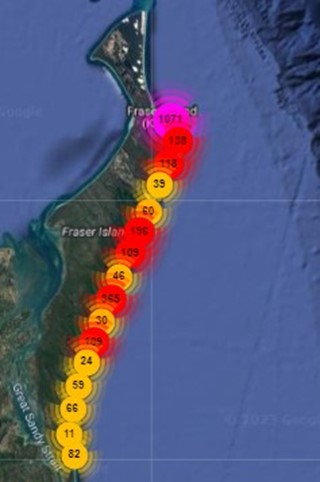
Since collaring, CCGreen21M has travelled a large portion of K’gari’s east coast between Waddy Point and Hook Point. The GPS points show he is spending most of his time around Waddy Point and Poyungan Rocks and even managed to utilise an open gate at Eurong and spend about 12hours inside the fence. The collar proved invaluable to tracking his movements inside the fence and identify when he had made his way back out again.
These collars are a valuable tool to assist the collaborative managers in keeping people and the wongari safe. Members of the public are also assisting by reporting wongari sightings, interactions, and inappropriate human behaviour to dingo.ranger@des.qld.gov.au.
Article contributed by A/Ranger in Charge NRM, Queensland Parks and Wildlife Service (QPWS)
 FINIA
FINIA 