The Pandanus Restoration Program is a joint initiative between FIDO and the Butchulla Aboriginal Corporation (BAC) supported by the Department of Environment and Science.
Pandanus restoration on K’gari is not a simple task, with logistics alone a complex exercise. In his latest field trip report, FIDO’s trip coordinator, Isaac Neisler provided an update on the work being undertaken in the field and Eurong nursery during the March, April/May, and June field trips.
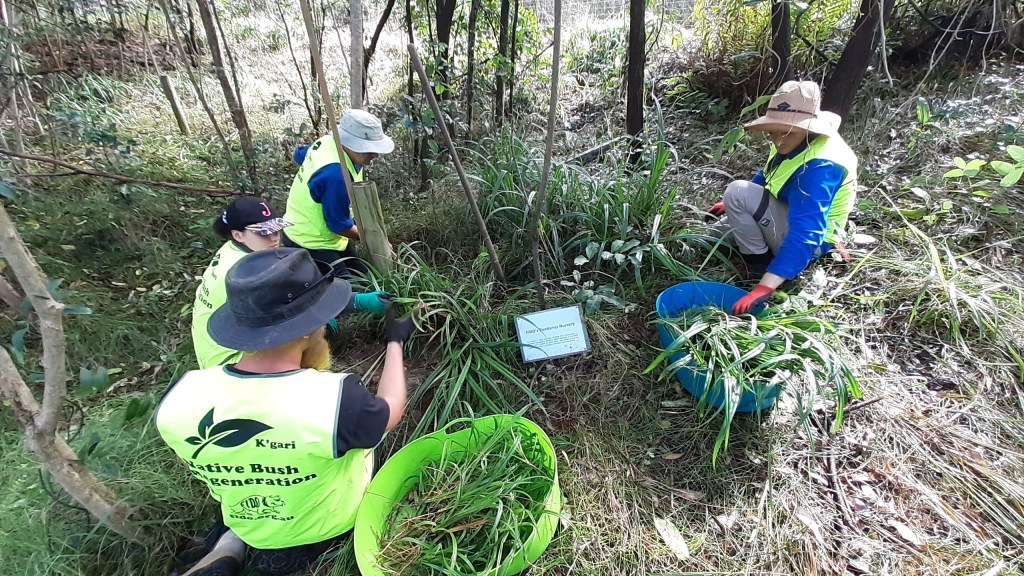
Volunteers in FIDO’s Pandanus field nursery (Photo: Len Mitcham) 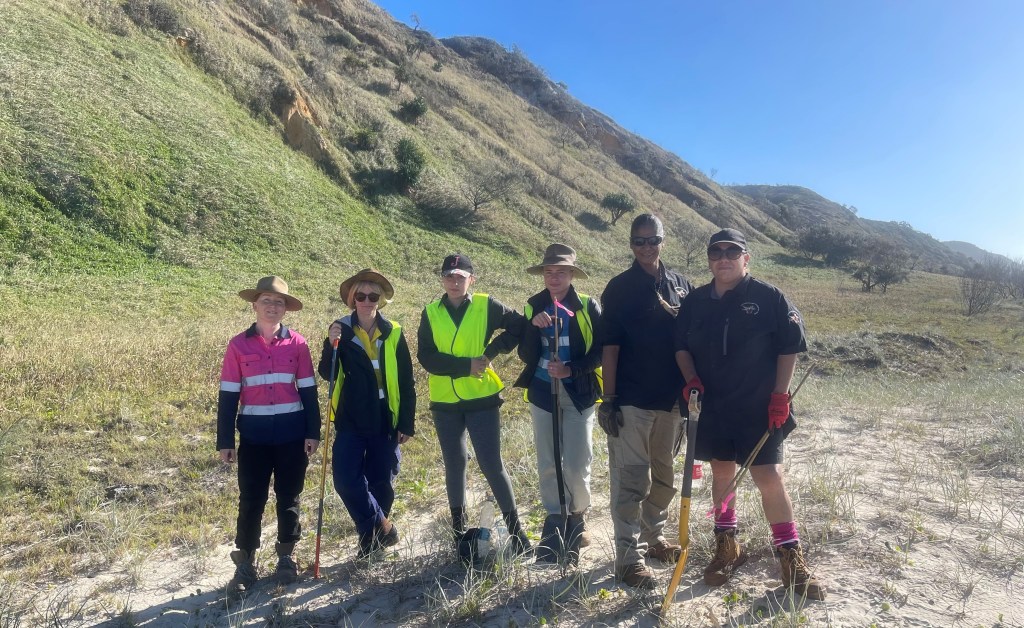
FIDO and BAC Crew planting out. Don’t forget your wongari sticks! (Photo: Isaac Neisler) 
Some of the 523 pandanus seedlings currently in the nursery (Photo: Isaac Neisler) 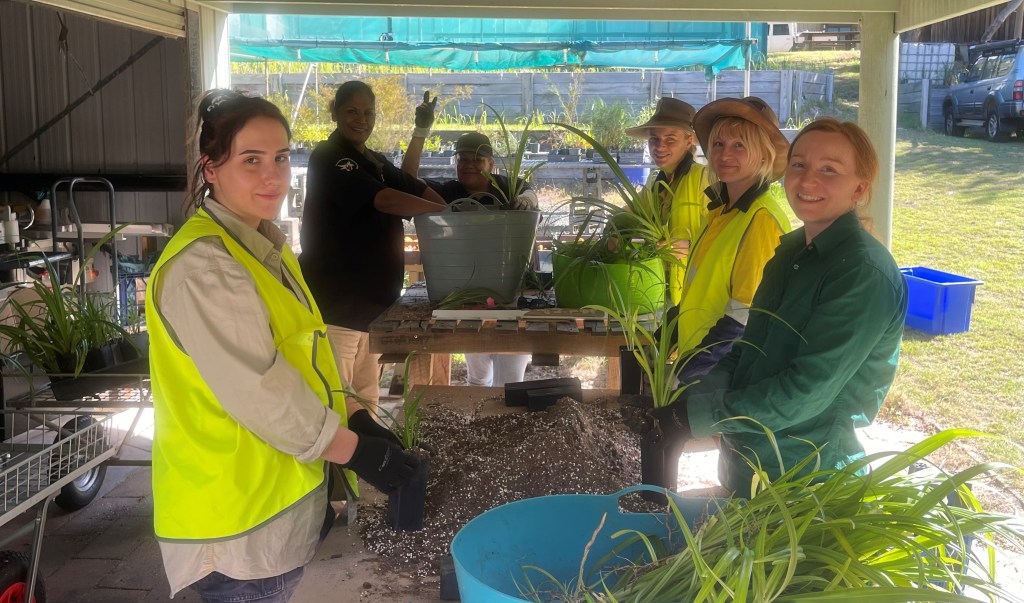
FIDO and BAC workers potting up young pandanus plants for sun hardening (Photo: Isaac Neisler) 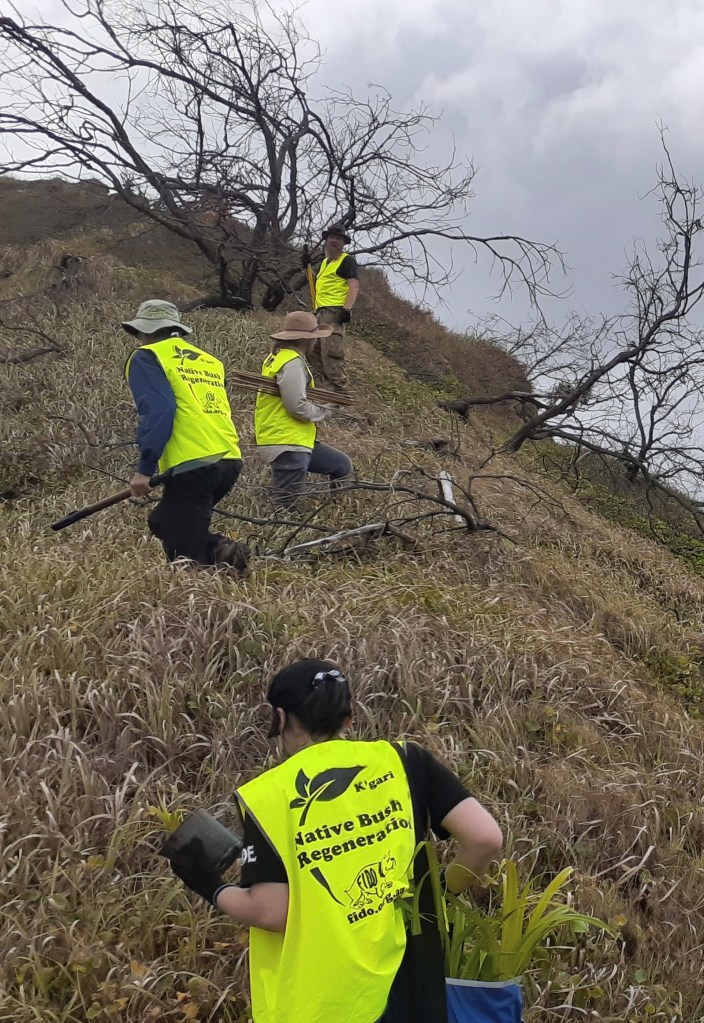
Restoring areas badly affected by the K’gari bushfire – step 1 Pandanus (Photo: Len Mitcham) 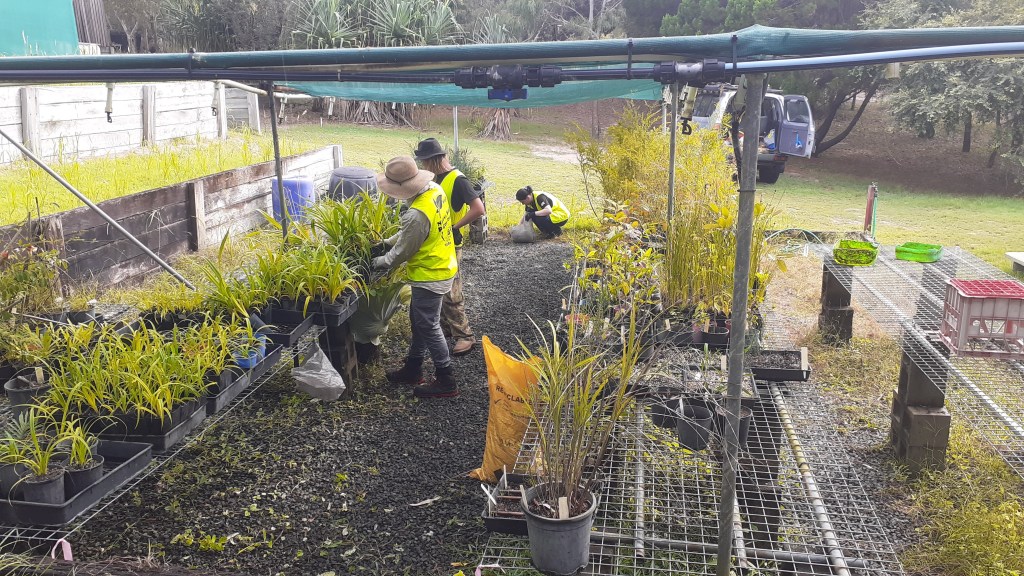
Pandanus seedlings are at various stages of development with weeding an ongoing task (Photo: Len Mitcham) 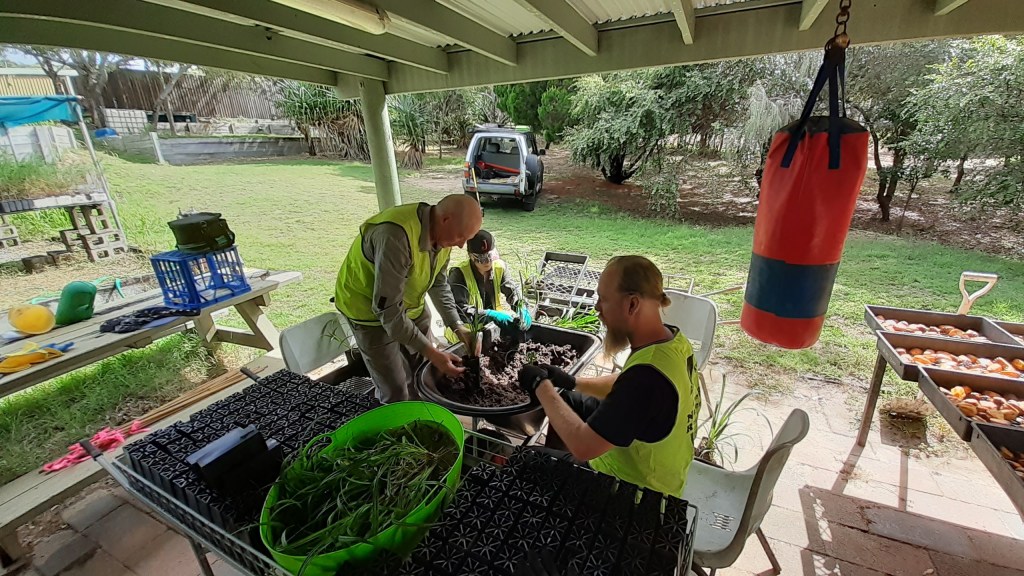
FIDO volunteers at work in the nursery potting out and drying Pandanus seeds (Photo: Isaac Neisler) 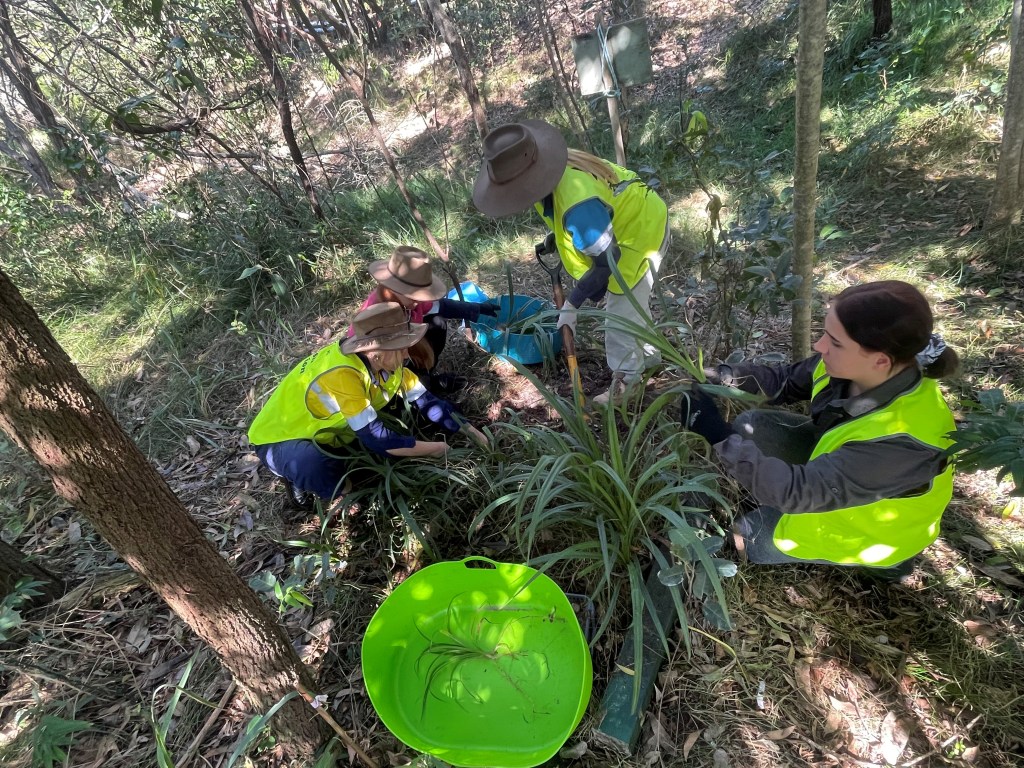
FIDO volunteers planting out Pandanus plants in a partially shaded site (Photo: Isaac Neisler)
Joining Isaac were team volunteers – Jade Anstee, Lyndall Bissett, Hayley Collings, Breanna Duthie, Rose Hart, Dan Hass, Brooke Ledger, Len Mitcham, Tori Pearce and Kevin Strong. The team worked alongside Lillian and Virginia from the BAC, who offered FIDO participants their insights into the history and culture of the Island and its people, the spirituality and significance of everything that makes up K’gari, greatly increasing the volunteers’ appreciation for the piece of paradise they are collaborating to save.
In June, 981 seeds, appearing to be viable, were collected between Eurong and the northernmost planting site in March (about 1km north of Red Canyon). Approximately 523 pandanus seedlings are currently in the nursery, with 1,612 seeds currently laid in 80 trays. Germination of these is expected to commence over the next 3 months.
Given the low stock of planting-ready at the nursery, only one site was planted out during the June trip with the remaining eighteen pandanus tube stock. The site was carefully marked via GPS with photo references taken to enable the pandanus to be monitored.
Supported by Queensland Park and Wildlife Service Ranger, Greg Matson, the team randomly selected six previous planting sites for assessment while collecting seeds, with the plan to only inspect further sites if the survival rates were poor. The team selected six sites in total, seeing good results at each.
Figure 1: Pandanus survival rates at K’gari restoration sites (June 2023)
| Site No. | Planting date | No. planted | No. alive (June 2023) | Notes |
| 1 | 27/4/23 | 23 | 20 | |
| 3 | 27/4/23 | 5 | 4 | |
| 4 | 27/4/23 | 9 | 8 | |
| 5 | 27/4/23 | 7 | 7 | |
| 6 | 24/7/23 | 49 | 30* | Incomplete count. *Located before having to abandon the site with wongari present. |
| – | 10/3/23 | 11 | 8 | Most plants struggling |
Pandanus planted in bare sand in direct sun were observed to be doing it a lot tougher than those planted in an area with partial shade or filtered sun for all or part of the day. In some sites, like Site 1, although there was some plant loss, the remaining plants were in a healthy condition. Planting success was primarily attributed to the amount of shade or filtered sunlight received throughout the day, given the significant canopy (at least 5m) on all sides of the site as well as other smaller plants (grasses, ground covers and other juvenile plants) growing throughout. Even though smaller plants could be considered competitors for resources, they do not appear to be currently hindering the young pandanus. This observation will play a crucial role in future plantings that will be focused on areas with sufficient shading to allow the young pandanus to acclimate to their new surroundings after planting.
During follow-up at site six, the team were chased off by a Wongari before locating all 49 plants (or as many as were alive). This was an educational experience for the volunteers having not brought their Wongari sticks from the vehicle as they had done previously. Gathering as a group, the team made lots of noise and backed out of the area slowly. A fallen tree branch was used to keep some distance between them and the Wongari until they reached the beach, where two passing QPWS Rangers put their vehicle between the team and the animal. The lesson was learned: always bring a Wongari stick!
Isaac suggested that the optimal trip length was six days (including travel) although one person regularly going to the island between trips to focus on cleaning, weeding, and organising the nursery is invaluable. The task list includes weeding and upkeep of the nursery, collecting seed stock of other local native species, and a clean-out of the larger shed with the collaboration of QPWS at the Eurong station.
FIDO thanks both the BAC and Ranger Grant Matson from QPWS for their collaboration with the hope that this partnership will strengthen as the work progresses.
Article contributed by Isaac Neisler, FIDO
 FINIA
FINIA 