The Invasive Species Council has called on communities in South-east Queensland and northern NSW to be on the alert for fire ants, warning that the recent heavy rainfall and wild weather in the region could accelerate the spread of the deadly pest.
“Fire ants are more active before or after rainfall and can form large floating rafts which move with water currents to establish footholds in new areas. We have recently seen evidence of this rafting behaviour on cane farms south of Brisbane,” said Invasive Species Council Advocacy Manager Reece Pianta.
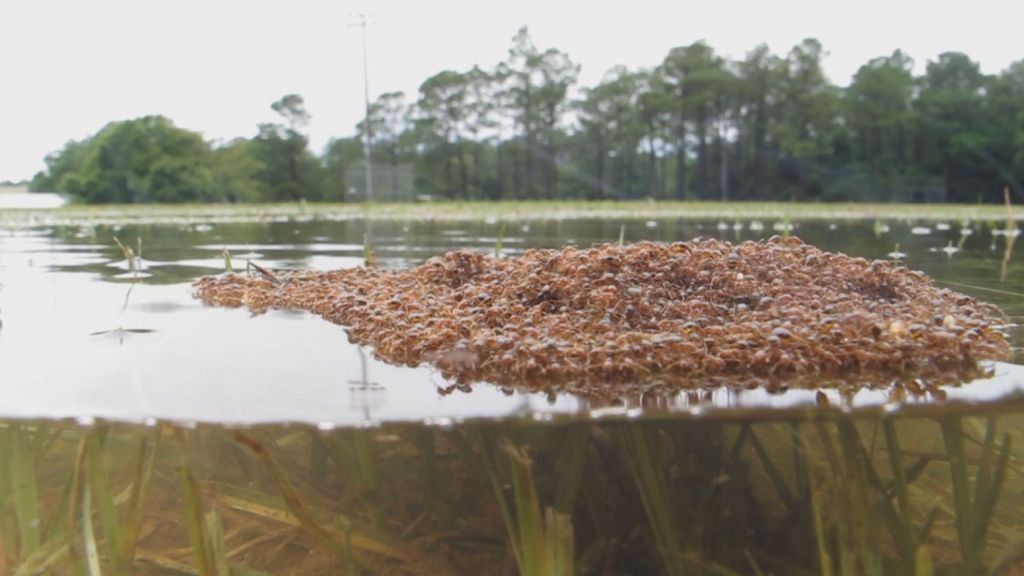
The good news is that it will be easier to spot fire ants and their nests at this time. So be on the lookout for fire ants, including your backyards, local parks, beaches, or bushland.
It’s easy to do your part. Just take a picture of any suspicious ants and report it. Don’t worry if you’re not sure what type of ant it is, every picture that is sent in will be vital information for the eradication program.
Six nests were reported by a property owner in South Murwillumbah in north-eastern NSW, 13 kilometres south of the Queensland border. A nest was also identified in mid-December on the Queensland-New South Wales border at Currumbin Valley.
With any building work underway, be careful when moving materials that might contain fire ants. Fire ants are also clever stowaways – materials like mulch and soil are ideal for transferring fire ants to new sites.
Ongoing containment and suppression mean it is still possible to eradicate fire ants from Australia if we all do our part. While out in the garden, at the park, taking a walk, camping or on K’gari, we should all be on the lookout for suspicious ants.
Fire ants are dangerous. Don’t put yourself, clothing, or belongings in direct contact with ants or their nests,’ said Mr Pianta.
The Invasive Species Council welcomed a recent $70 million four-year commitment from Victoria towards the national fire ant eradication program in addition to the recent funding boosts from the federal, NSW, Queensland, ACT and NT Governments. However, there is still a $56 million funding shortfall for the national program.
Fire ants are one of the world’s worst super pests and, if they are allowed to spread across the continent, their economic impact will be greater than cane toads, rabbits, feral cats, and foxes combined.
They will devastate Australia’s environment and agriculture, cost our economy billions annually and we could see over 140,000 extra medical visits every year as they sting Australians at the park or in the backyard.
** IMPORTANT: IF YOU ARE ATTACKED BY FIRE ANTS SEEK MEDICAL ATTENTION **
How to look, snap and report a suspected fire ant nest:
Keep your eyes peeled for suspicious ants or ant mounds whether you’re out in the garden, at the park, taking a walk, camping or at the beach. Don’t worry if you’re not sure what type of ant it is, every report is vital information for the eradication program.
Be mindful of your safety if you think you have found fire ants. Keep your distance and do not put yourself, clothing, or belongings in direct contact with fire ants or their nests.
Take a photo or short video of the ants on your smartphone. Try to take a few close-ups of the ants and their nest.
Report all suspected fire ants to Biosecurity Queensland on 13 25 23 or www.fireants.org.au
Adapted from an article by the Invasive Species Council
 FINIA
FINIA 