Avian influenza is a viral disease of birds found across the globe.
Avian influenza virus strains are described as low pathogenicity (LPAI) or high pathogenicity (HPAI). Most LPAI strains of the avian influenza virus cause minimal disease in wild birds and poultry. However, some LPAI strains can evolve into HPAI strains when they spread among poultry. There are also strains of HPAI spreading globally causing widescale death of poultry and wild birds.
So, why is avian influenza a worry for Australia and K’gari?
Until recently, few of the avian influenza strains have made it into Australia, meaning that our wild birds and poultry have remained healthy, but have little resistance to strains of avian influenza.

The HPAI H7N3 strain was confirmed on 22 May 2024 at a poultry farm near Meredith, in the Golden Plains Shire, Victoria. Six other poultry farms in the shire have been infected.
To control the outbreak, movement and control zones have been set up, in both Victoria and NSW. Poultry must be kept indoors in certain areas to prevent a ‘virus jump’ event. Farms that have tested positive are being depopulated to prevent virus spread and further evolution, and importantly, to prevent the HPAI virus from entering wild bird populations.
Another HPAI strain, H5N1 clade 2.3.4.4b, is a real cause for concern. Spreading globally, causing widescale outbreaks, the virus has caused extensive losses of poultry and wild birds, and spillover infections of a wide range of terrestrial and marine mammal species. Occasional infections have been detected in humans.
Australia is currently the only continent in the world that remains free of this pathogen, but there are concerns about the potential impacts on poultry and wildlife if (when) it arrives on our shores. On 14 October 2024, the Australian Government announced a $95 million integrated package to further prepare and protect the nation against the threat of the HPAI H5N1 strain.
What are the risks of an H5N1 outbreak in Queensland?
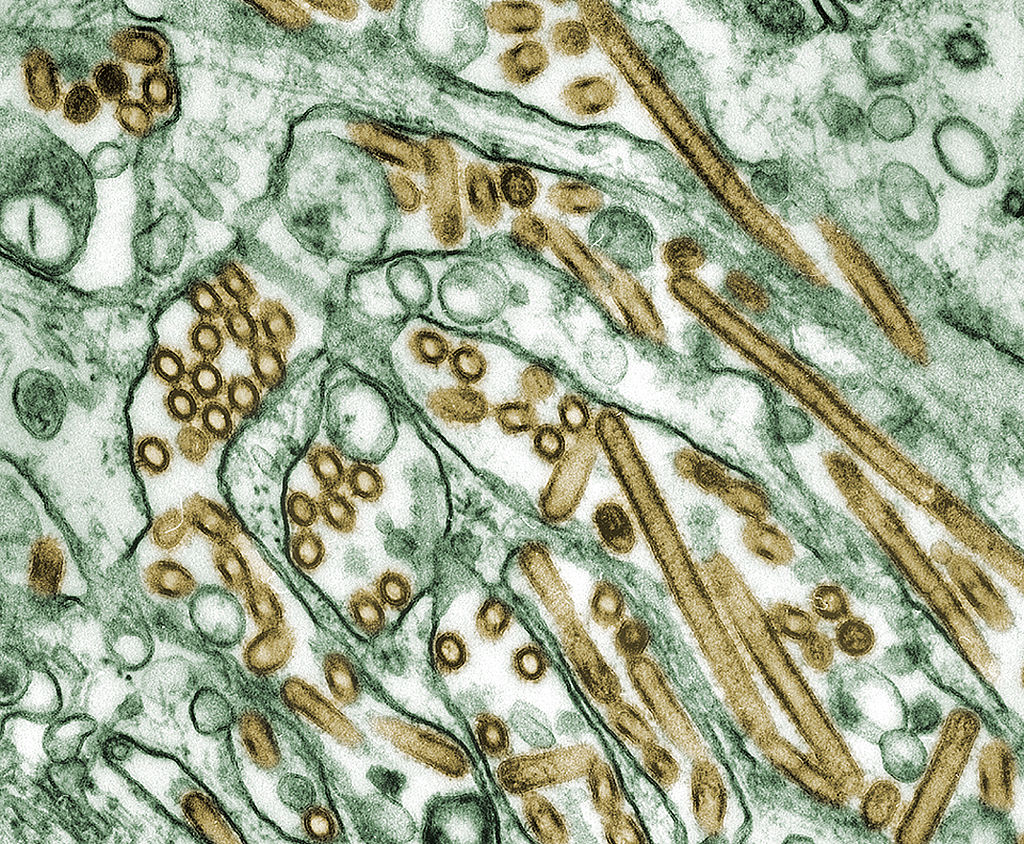
Previously affecting mostly domestic poultry, the virus has become a major risk for wildlife, including in UNESCO World Heritage sites, Biosphere Reserves and Ramsar sites recognized internationally for their importance to nature conservation and which are critically important for migratory species.
The Great Sandy Strait, a Ramsar wetland, provides a roosting and feeding habitat for thousands of migratory shorebirds moving annually between Australia and Siberia via Korea and China on the East Australian Australasian Flyway. Given these avian linkages to Asia and the Northern Hemisphere, the risk of an H5N1 introduction is high.
What can you do?
If you see sick or dead wild birds or poultry, including backyard chooks, you must call the Emergency Animal Disease Watch Hotline—1800 675 888.
For more information, check out this UNESCO webinar or https://whc.unesco.org/en/avian-flu/.
Article compiled by Sue Sargent, FINIA
 FINIA
FINIA 