During a recent weed control trip to Happy Valley, FIDO volunteers took a swim in the magnificent Wyuna Creek north of Dundubara, on the advice of my good friend Myles Broom from the Butchulla Land and Sea Rangers. Myles introduced me to this little piece of paradise as “Little Eli.” A most appropriate name.
The March flies were in abundance! And vicious!! Our volunteers slapped them in defence and threw them into the water. They were rapidly snapped up by small jungle perch (Kuhlia rupestris). This entertained us for quite some time, much to the delight of both us and the jungle perch.
Later in the day, we repeated the activity in Eli Creek.
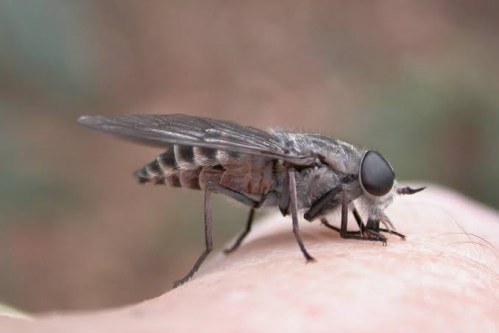
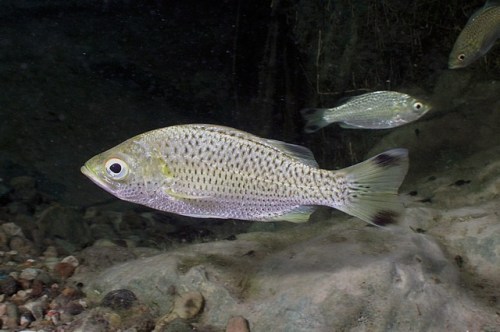
Jungle perch live in freshwater streams on the East Coast all the way from Cape York to Northern New South Wales. They are amazing little hunters, rising at lightning speed to snatch any insect that lands on the water surface.
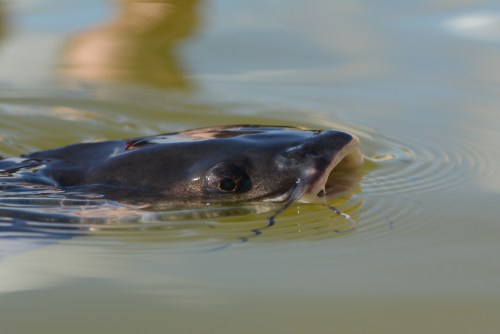
Later that trip the group visited Lake Wabby late one afternoon at dusk. There was no one else there which was wonderful. While sitting quietly in the warm water, we were joined by a school of about eight quite large catfish, the lesser salmon catfish (Neoarius graeffei) that I have seen in Wabby on many occasions, but always at a distance. They came within touching distance of us.
The March flies were again highly active and we offered them to the catfish, which they relished. Unlike the jungle perch, their approach was somewhat slow and cumbersome, but they gulped them down with glee. When we threw the dazed March flies onto the water surface, they attracted a feeding frenzy of very small fish, which in turn attracted the large catfish that cruised in and gulped down the catch.
Most of the lakes on K’gari are perched lakes that depend entirely on direct rainfall for replenishment. There are no inflowing streams. Consequently, they are very low in nutrients and support a low level of aquatic life. The water in perched lakes is always clear, though in some cases is stained brown with tannins from peat in the lake bed.
Lake Wabby on the other hand is a barrage lake, formed by an encroaching sand blow that has blocked a waterway. It has a constant inflow of water and nutrients that accumulate, making it able to sustain much more aquatic life.
Wabby has a green tinge from microscopic algae that thrive in the higher nutrient-level water. These single-celled algae photosynthesise by trapping ultraviolet rays from the sun and absorbing carbon dioxide from the water, forming sugars and the base of a food web providing an opportunity for higher life to exist in the lake. Hence the large catfish in Lake Wabby, which are not present in the low-nutrient perched lakes.
This is another example of the wonderful diversity K’gari has to offer. The darting jungle perch thrive in the fast-flowing, crystal-clear streams, while the lumbering lesser salmon catfish have found a niche in Lake Wabby. Unlike us, both species of fish love the March flies, and welcome the human involvement of helping them catch their natural food.
Contributed by Peter Shooter, FIDO
 FINIA
FINIA 