It’s been a few years since I last took the barge to K’gari or joined a FINIA meeting, but the energy and purpose of those gatherings still resonate. FINIA has always been more than a partnership—it’s a movement built on collaboration, shared knowledge, and a deep commitment to protecting one of Australia’s most iconic landscapes.
I joined the FINIA journey around 2008–09, just after its formation. At the time, Hervey Bay Council was transitioning into the Fraser Coast Regional Council, and I stepped in as the Biosecurity Officer focused on invasive species management. Working alongside Tony Van Kampen, Chris McCarthy, and later Colin Zemek, I had the privilege of contributing to a range of initiatives that reflected FINIA’s core mission: safeguarding K’gari’s natural integrity.
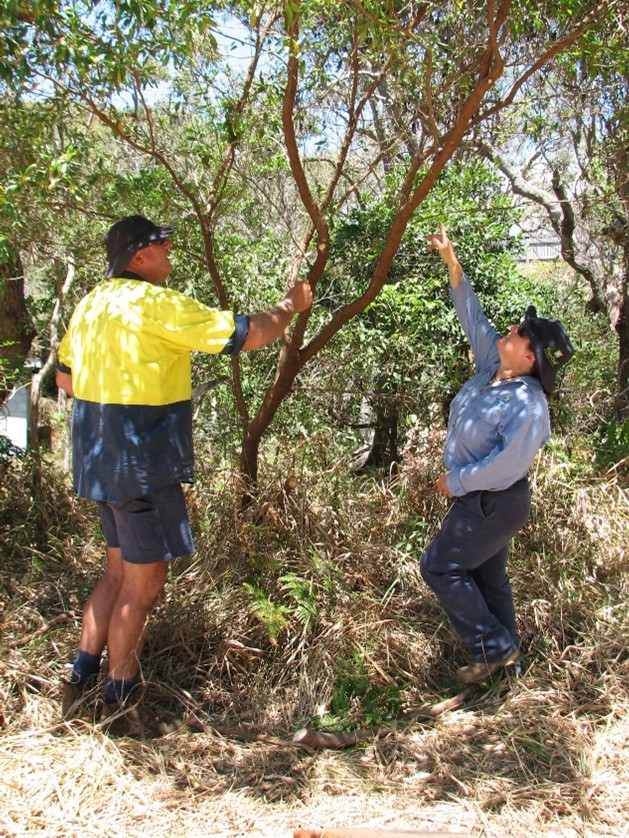
One of our earliest collaborative efforts was the Bitou Bush Surveillance Program, conducted with QPWS and Biosecurity Queensland . These twice-yearly surveys were more than just fieldwork—they were a testament to the power of coordinated action. Mapping township invasive plants, supporting the Island Weed Management Plan led by Jason Harvey and QPWS, and prioritising species for control were all part of a broader strategy to restore ecological balance.
Other memorable projects included:
- The Jamella Pandanus initiative to protect native Pandanus from dieback
- Trial cane toad trapping at Waddy Point
- The Fraser Island Garden Guide, promoting endemic alternatives for landscaping.
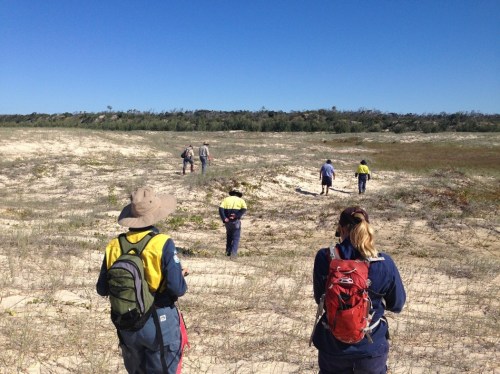
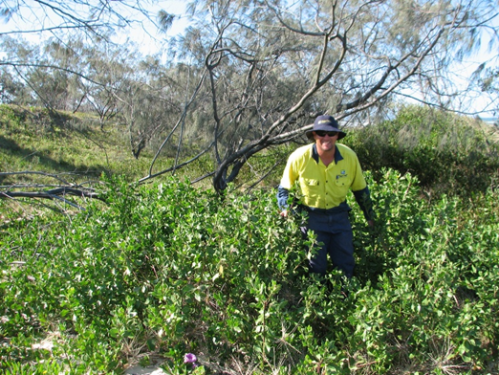
The Fraser Coast Biosecurity team played a vital role in township pest plant management and the spirited “emu parades” to hunt Bitou Bush and I love the photo of QPWS and Council members trekking the dunes. I also found a photo of Matt Clarke crouched beside a sprawling Bitou south of Eurong—one of many moments that captured the dedication of our team, which over the years included Craig Hartz, Terry Horne, Shane Kelly, Dan Novak (now with QPWS), Tina Ravenau, Rod Buchanan and Andrew Hatch.
FINIA’s strength lies in its adaptability. While the early focus was on invasive plants, the scope has broadened to include fauna, habitat restoration, and community education. New faces have joined, but the shared purpose remains: to protect K’gari’s unique biodiversity and cultural heritage.
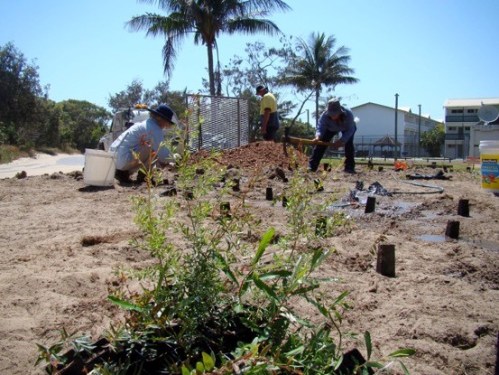
Though I couldn’t locate the photo of Col, John Sinclair, and the rest of us setting up the Eurong roundabout garden, the memory stands as a symbol of what FINIA represents—hands-on collaboration, respect for Country, and a vision for a thriving future.
To all past and present FINIA participants, thank you. Your efforts have shaped a legacy that future generations will inherit with pride. May K’gari continue to inspire and flourish under our collective care.
Article contributed by Juliet Musgrave
Editor: A dig into FINIA’s archives located the photo Juliet may have been looking for:
 FINIA
FINIA 