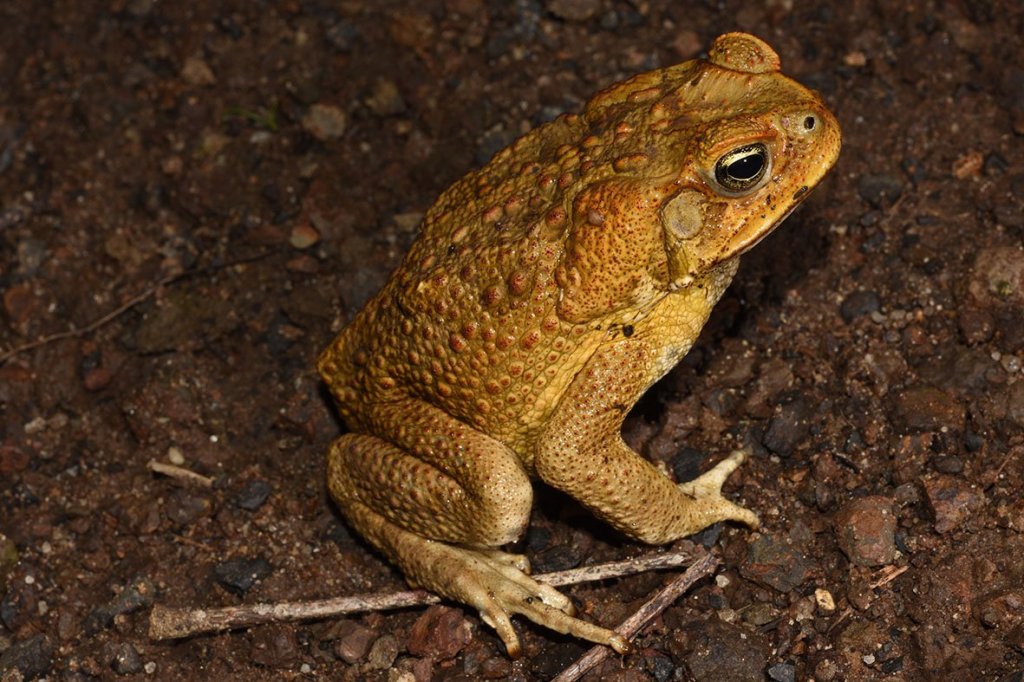
Introduced to Australia in 1935, cane toads (Rhinella marina) were first reported on K’gari in the 1960’s with their appearance coinciding with a dramatic reduction in the island’s snake populations, particularly death adders.
Although there were some attempts to trap and remove adult toads by Queensland Parks and Wildlife Service and FIDO (in the early 2000s), the adaptable pest has spread across the island, moving from wetland to wetland.
Anecdotally, some lakes and wetland areas appear to have avoided the pest, with the suggestion that the acidity of some lakes may prevent successful breeding (this has not been verified or researched).
In 2015, FINIA brought Research Assistant, Charlene Bezzina, from the University of Sydney’s Shine Laboratory to K’gari. The research team, led by Professor Rick Shine, had been looking at a new method of cane toad control focussing on the toad’s own bufotoxin, a potent highly toxic poison (containing chemicals like bufagins and bufotenine). The toad releases this milky-white, substance as a defence mechanism when it feels threatened, is handled, bitten, or mouthed by a predator.
Research has shown that cannibalistic cane toad tadpoles were attracted to bufotoxin using the toxin as a chemical cue to locate and consume younger individuals of their own species (including eggs).
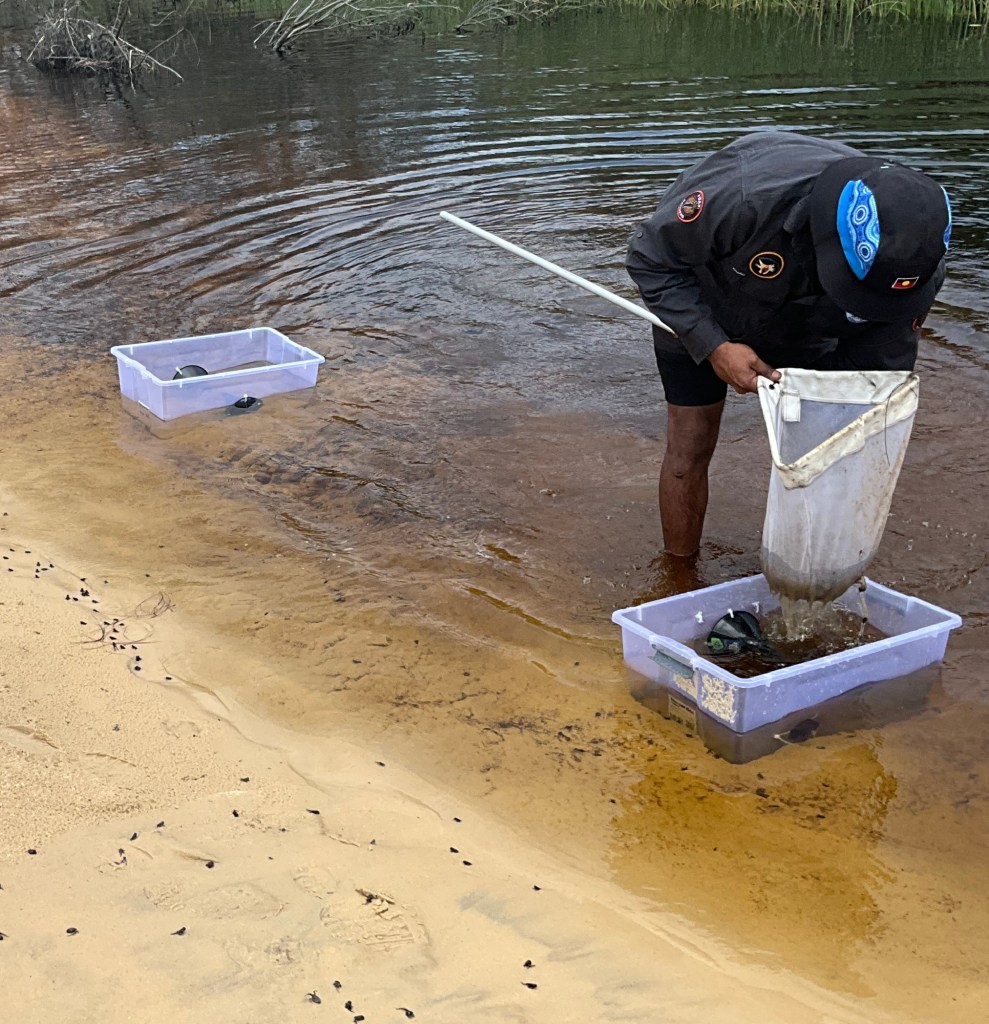
Although the research was still in its early stages at the time, FINIA members were taught how to build a rudimentary trap and carefully collect bufotoxin from dead cane toads to be used as a lure. After deploying the trap in an area known to contain cane toad tadpoles (ideally in Spring-Summer), hundreds to thousands of tadpoles could be collected from the water body.
Initial concerns about the potential for inadvertent bycatch were allayed by research (Crossland et al. 2012), which demonstrated that cane toad toxins are detected and avoided by native tadpoles and fishes, and that traps baited with these chemicals repel rather than attract the tadpoles of native frogs.
Research and development then led to a stabilised lure designed by the University of Queensland and licensed to not-for-profit environmental organisation Watergum, which made the product commercially available in late 2021.
Although it is unlikely that cane toads can ever be eradicated on K’gari, we can help control them by reducing tadpole numbers in K’gari’s most ecologically and culturally sensitive areas.
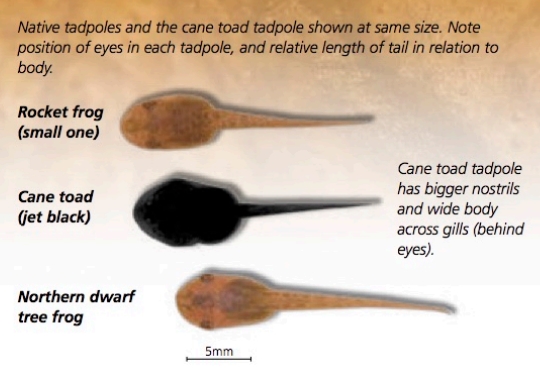
In late 2025, QPWS rangers committed to working with FINIA partners to develop a QPWS K’gari collaborative Cane Toad Management Program, highlighting target areas for cane toad management on K’gari and their expectations of any participants operating within the K’gari National Park – such as permits, labelling, monitoring traps, collecting data and the ethical euthanasia of pest animals.
What can you do to help?
- We don’t know how cane toads arrived on K’gari. They may have been carried across from the mainland during the flooding of the Mary River, or introduced accidentally with building materials, camping equipment, vehicles and trailers. Please check your vehicle, equipment and materials carefully for any pest hitchhikers before coming onto K’gari.
- If you find cane toads or their tadpoles on K’gari, please report the date/location and provide an ID photo (if possible) to Linda Behrendorff via email linda.behrendorff@detsi.qld.gov.au. This will help with the Cane Toad Management Plan’s development and ultimately in prioritising where land managers and FINIA partners can best focus their efforts.
Article contributed by Sue Sargent, FINIA
 FINIA
FINIA 