How AI helped preserve 50 years of K’gari expertise.
Many of you knew my father, John Sinclair, and the decades he gave to K’gari. When he passed in 2019, one of my quieter worries was about everything he knew, not just the facts, but the connections between them. How tourism pressure relates to dingo behaviour. How coastal erosion patterns link to management decisions made years earlier. How one policy fight informed the next.
That knowledge lived in FIDO newsletters, research papers, submissions, and articles, an extraordinary archive, but not one anyone could easily sit down and learn from. I suspect many of you face the same challenge. Your organisations hold years of reports, survey data, submissions, and hard-won observations. It’s all there, but finding what you need when you need it can feel impossible.
I want to share something that surprised me, because it might help.
What I did
Late last year, I used a free tool called Google NotebookLM. It’s an AI tool, and I know that phrases like this can feel loaded, visions of complexity, expense, or something only tech people use. But this was genuinely straightforward.
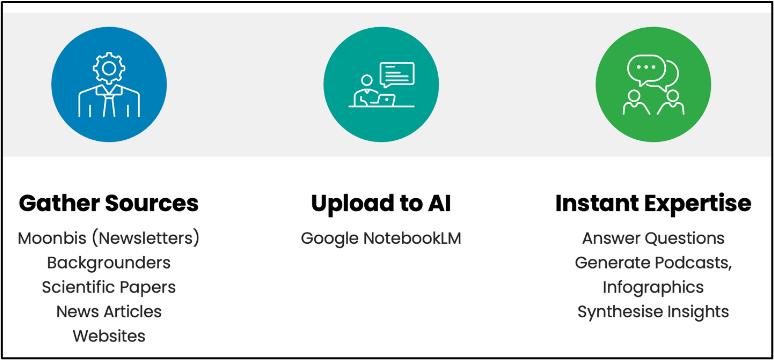
I gathered publicly available documents from fido.org.au and associated organisations, the newsletters, research briefs, scientific papers, news articles, and uploaded them. I linked to the FINIA, BAC and BNTAC websites. The whole process took less than an hour. The most technical step was combining some PDFs, so they’d fit within the tool’s limits.
Once the documents were uploaded, I could ask questions in plain English and get thoughtful, sourced answers back.
What surprised me
I asked about tourism impacts on K’gari. Instead of returning a keyword match from a single document, it drew together observations from across decades, erosion from vehicles, wildlife disturbance, pollution — and cited the specific sources. It understood how issues connected.
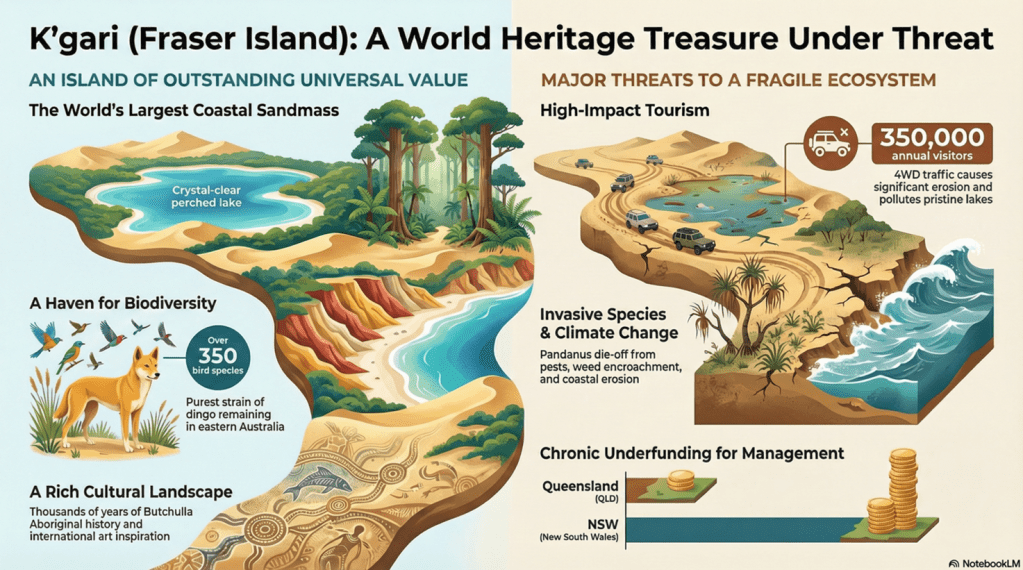
I asked about the dingo situation. It didn’t oversimplify. It explained that K’gari’s Wongari represent the purest dingo strain in eastern Australia, acknowledged the real safety concerns, and recognised the role human behaviour plays. It held the complexity, much as Dad would have.
It also generated a conversational audio summary, essentially a podcast about K’gari’s conservation history, without any scripting or prompting from me. That podcast is now available on fido.org.au: Introduction to K’gari – Audio Conversation Summarising K’gari.
Why I’m sharing this with you
We all know what it feels like to lose institutional knowledge. A long-serving member steps back, records sit in boxes or old email accounts or the people who remember why things were done a certain way aren’t always around to ask anymore.
This tool won’t replace that lived experience. But it can make the written record genuinely useful again, searchable not just by keywords, but by meaning. It can help new volunteers get up to speed, support advocacy with well-sourced answers, and keep decades of careful observation accessible rather than buried.
If you’d like to try it
You don’t need technical skills or a budget. If your organisation has reports, newsletters, or research documents in PDF form, you have what you need to start. Google NotebookLM is free, and the process is no more complicated than uploading files and asking questions.
If this feels like something your group could use but you’re not sure where to begin, I’m happy to help. We’ve spent years building the knowledge that underpins our conservation work, it would be a shame to let it stay hidden in filing cabinets and old hard drives when there’s now a simple way to bring it back to life.
Article shared by Keith Sinclair, keith@sinclair.org.au
 FINIA
FINIA 