Rethinking weeds as a resource.
Invasive weeds are one of the major threats to the health of native ecosystems. Introduced plants can often outcompete native species when released into the environment and form extensive areas that are of little value to local insects, birds and animals. Controlling invasive plants takes a great deal of energy and resources from community volunteers and natural resource management groups.
On Butchulla Country, which includes Maryborough, Hervey Bay and K’gari, a project has begun to transform weeds into botanical paper, aiming to produce sustainable mementos or souvenirs to raise funds for biosecurity programs. Another expected benefit is providing skills and training for local people and offering an exciting new eco-tourism experience.
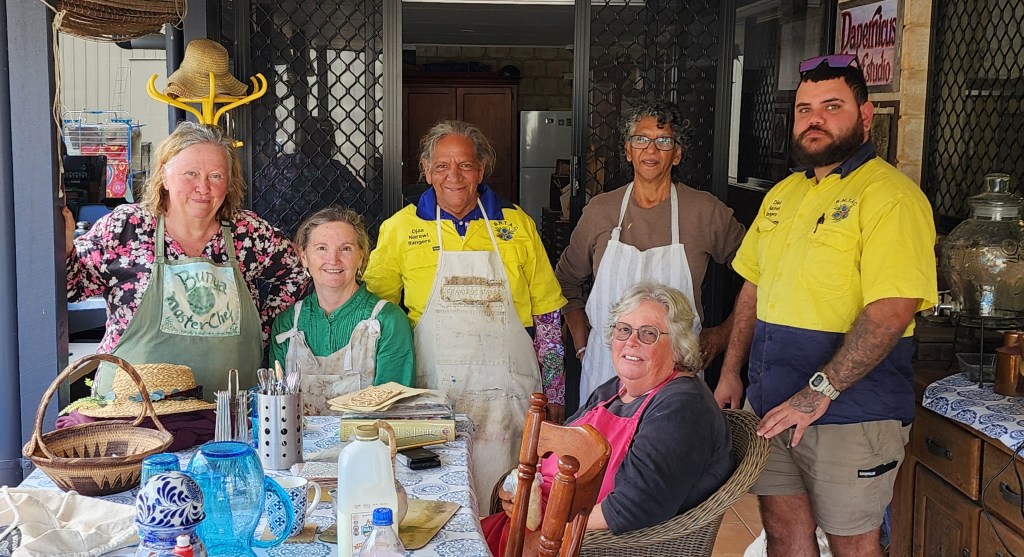
In July, a pilot program was initiated by FIDO, the watchdog of K’gari with Butchulla Native Title Aboriginal Corporation, (BNTAC) to investigate the feasibility of making paper from the weeds removed by weeding teams.
The Weeds to Paper Pilot project first visited the Fay Smith Wetlands, in Maryborough, a natural wetland where the team observed at least seven different types of weeds. Samples were collected for testing for paper-making potential. Next, the stalks were chopped, cooked, rinsed then blended to form a pulp. On day 2, paper was successfully made from molasses grass and Mexican petunia. On Day 3 several types of pulps were made into paper sheets in A6, A5 and A4 sizes. These will be shared with the wider community to develop ideas on how to package and present the paper as an eco-friendly memento of Butchulla country.
A group of Aboriginal rangers in Arnhem land (Arnhem Djurra) are currently converting the invasive weed, Gamba grass, into paper. Consultant to Arnhem Djurra, Winsome Jobling, sees tremendous potential in this concept seeing weed biomass as a resource rather than a problem. Winsome gave a talk in 2023 to the International Association of Hand Papermakers and Paper Artists (IAPMA) the world-leading organisation for paper artists. During his presentation, Papermakers Save the World! Winsome stated, “Educating the community about plants including biology, taxonomy, habitats and indigenous uses encourages people to appreciate the diversity and interconnectivity of the world around them. Local projects that develop descriptive signage and the use of technology like databases, augmented reality and social media are some of the ways to stimulate this learning. Papermakers and local authorities have a lot to win when they collaboratively pursue the protection and management of natural resources to create multiple benefits for citizens now and into the future”.
Converting significant amounts of weeds into paper would address several challenges and help to protect natural ecosystems in the following ways:
- Provide an aim for weeding rather than just relocating pest plants to municipal facilities which themselves often become weed-infested.
- Generate income, education and employment possibilities for young people for the future and offer an engaging eco-tourism experience.
- Papermaking is a low-tech process that does not generate any harmful waste. Other local natural ingredients including charcoal, clay and ochres can be used in small quantities where appropriate.
- This model is already working in other countries including France, Slovenia, Ghana, five states of the USA and the Northern Territory.
- Dumping plant waste is not favoured by local government and this program, if scaled up, could reduce the volume of dumped plant material. Some recycled paper (up to 10%) can also be used in the process, further reducing strain on local waste disposal systems.
The Paper of Weeds team aims to meet regularly for the remainder of 2024 and aims to have products on sale for Christmas through local outlets and art galleries.
Article contributed by Zela Bissett, FIDO
 FINIA
FINIA 
Paper has successfully been made from molasses grass and sword grass (also kmown as “Mother in Law’s Tongue”. Some prototype products will be available soon.