Ten Butchulla Land and Sea Rangers recently joined K’gari Biosecurity Officer, Seth Henaway, AJ Perkins from the NSW Threatened Species Team, Department of Agriculture’s Forestry Pathologist Dr Geoff Pegg and CSIRO specialists Tracey Steinrucken (Invasive Pathways) and Tim Vance (Aquatic Weeds) for an intensive 1-day introduction to the world of invasive weeds, pests and diseases.
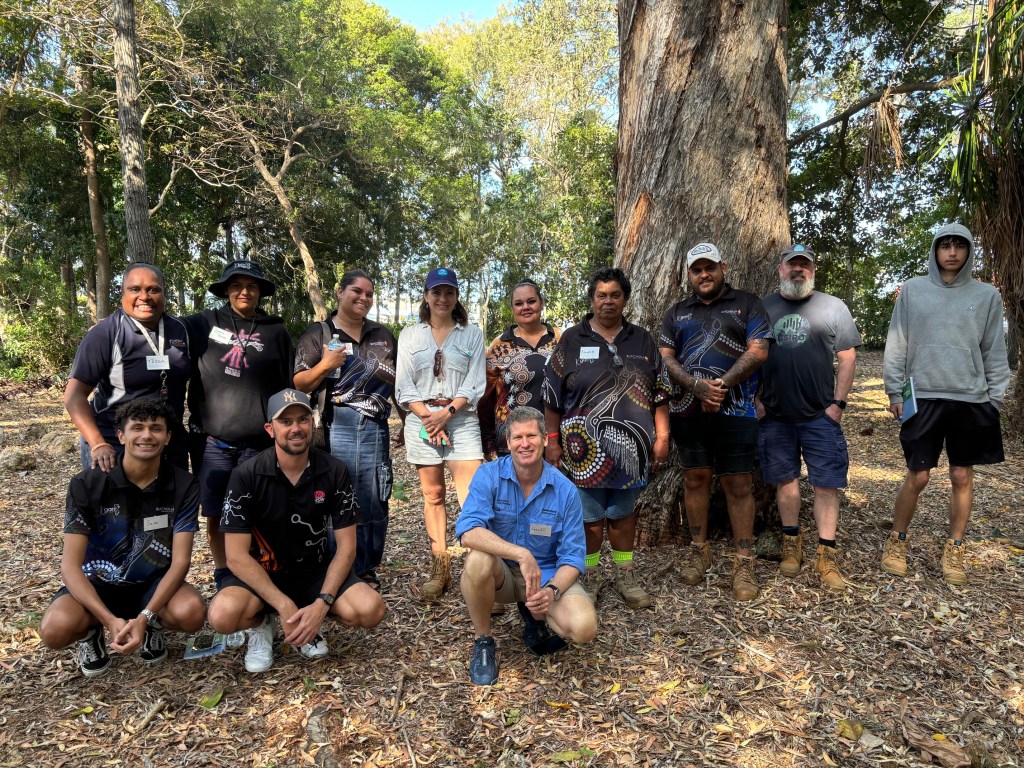
The training, which is part of the K’gari Biosecurity Strategy project, was funded by an Australian Heritage Grant aiming to increase the capacity to detect and report invasive species and prevent the establishment and spread of invasive species on K’gari.
Biosecurity is defined as the protection of the economy, the environment, social amenity and human health from the negative impacts associated with invasive species (including weeds, animal pests and diseases) and contaminants. But invasive species can also impact cultural values and the health of K’gari.
Rangers identified values that are unique to K’gari including threatened species like Mur’rindum (black-breasted button quail) and acid frogs, the island’s lakes, streams and wetlands and cultural values like medicinal plants, spirit, scarred and directional trees before considering the importance of biosecurity in protecting these values.
The team discussed National Priority Plant Pests – ‘exotics’ that are located outside Australia, before turning to invasives like Polyphagous Shot Hole Borer (Euwallacea fornicates) detected in WA earlier this year and top priorities like Red Imported Fire Ants (Solenopsis invicta), Phytophthora dieback (Phytophthora cinnamomi and other factors) and even the looming threat of Avian influenza (HPAI H5N1 strains).
Rangers completed exercises to assess entry pathways onto K’gari which include:
- People – on clothing, footwear, camping, fishing and personal gear
- Vehicles – including 4WD, caravans, boats, jet-skis and trailers
- Commercial machinery and equipment brought onto the island
- Natural sources – wind, water (particularly floodwater) and animals such as migratory shorebirds.
With the Great Sandy Strait a Ramsar Wetland of international significance supporting over 1% of the global population of seven species of migratory shorebirds including Far Eastern Curlew and Bar-tailed Godwit, this will increase the chances of Avian influenza being introduced to K’gari.
So, what can Rangers do to help? Aside from considering personal biosecurity (Come Clean, Go Clean!) whenever they are out in the field, Rangers are the first line of defence in biosecurity.
If you spot something that appears out of place, or unusual symptoms like dieback, then mark the spot on your GPS, take some photos (don’t forget to include an object that provides scale if you can), reduce the risk of spread if you (wash down your boots and equipment if you have entered the site) and report it to Biosecurity Queensland on 13 25 23 or the Emergency Animal Disease Hotline on 1800 675 888.
Early intervention may just help prevent the spread of K’gari’s next invasive pest.
Article contributed by Chantel Van Wamelen, Butchulla Aboriginal Corporation

