After 21 months of development, the Butchulla Aboriginal Corporation (BAC), supported by the K’gari Biosecurity Advisory Group (KBAG) made up of the island’s landholders and major stakeholders, has launched a 20-year Biosecurity Strategy for K’gari.
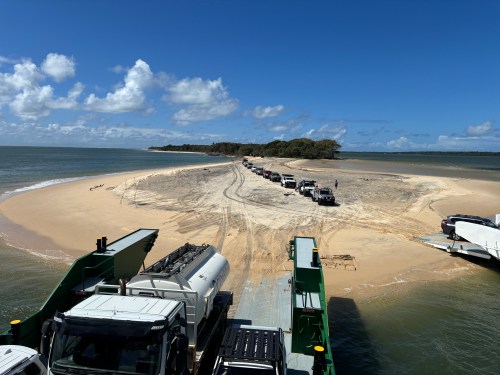
Hundreds of vehicles come onto K’gari with no inspection in place (Photo: FINIA) 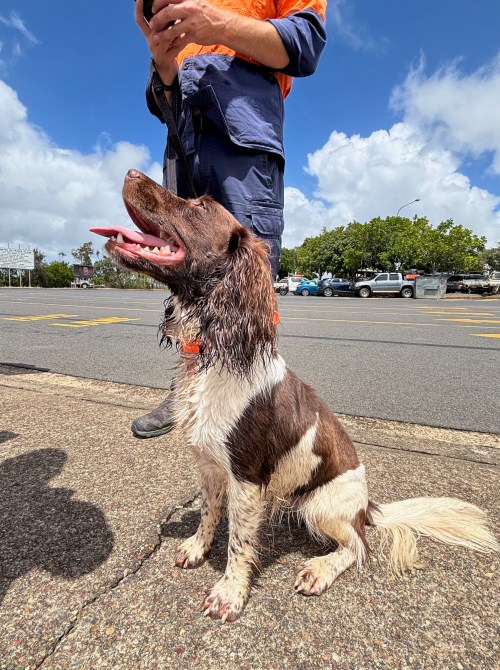
Alice the sniffer dog provides a quick and effective vehicle check (Photo: FINIA) 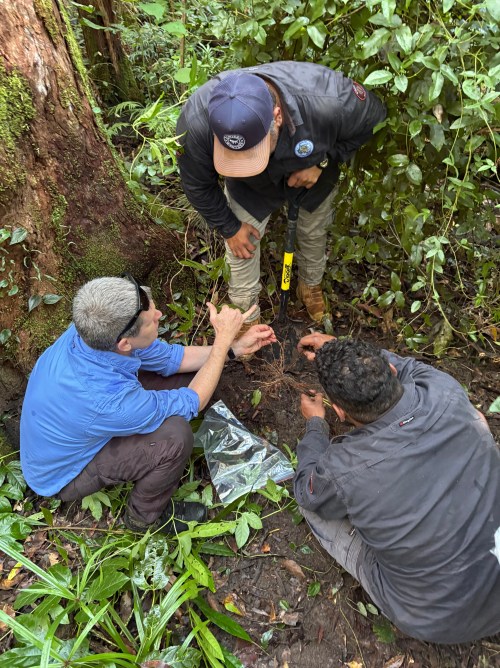
Surveillance can include further investigation to identify pathogens causing dieback (Photo: BAC) 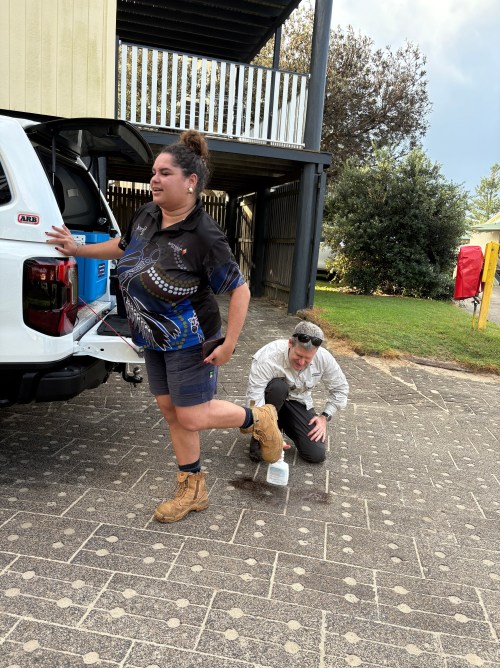
Biosecurity is also about preventing the spread of weeds, pests and pathogens (Photo: BAC)
Funded by an Australian Heritage Grant, the strategy aims to reduce the threat of invasive weeds, pests and diseases to World Heritage-listed K’gari. The strategy focuses heavily on education and awareness, prevention (stopping invasive pests at the mainland border), and adaptive management through surveillance (monitoring) and management activities on K’gari.
Biosecurity was identified as a high threat to the island (along with increased visitation and the impacts of climate change) by the IUCN in their 2025 Outlook Report for K’gari. Managing biosecurity threats to K’gari was one of five areas of action identified by the Butchulla Working group to increase the island’s resilience to a changing climate in the Butchulla Climate Change Response Plan for K’gari (2024) and a priority by the K’gari World Heritage Advisory Committee in their K’gari World Heritage Strategic Plan 2025-35.
The K’gari Biosecurity Strategy was supported by Risk and Cost-Benefit Analyses undertaken by the Queensland University of Technology’s (QUT) Ella-Jane Raymond and Prof. Jennifer Firn – both informed by experts in K’gari’s threatened and invasive species.
The QUT Study identified that in the absence of a significant and coordinated biosecurity strategy, K’gari faces widespread ecological impacts from invasive species across its universally recognised ecosystems (i.e. perched lakes, heath, rainforest and fens) over the next twenty years. The study also suggested that if a coordinated biosecurity strategy was implemented, these risks could be greatly reduced, by a minimum of 36% for perched lakes, and up to 77% for K’gari’s rainforests (Raymond and Firn, 2025).
In addition to the Strategy, the collaborative working group developed a 1-year Annual Implementation Plan focusing on actions for 2026-2027 and a Business Model and Funding Options to support the strategy, which were estimated to be $2.3M a year (in addition to any capital infrastructure).
Government and non-government partners represented in the collaborative project included Biosecurity Queensland (Department of Primary Industries), Butchulla Native Title Aboriginal Corporation, Department of Natural Resources and Mines, Manufacturing and Regional and Rural Development, Environmental Biosecurity Office (Commonwealth Department of Agriculture, Fisheries and Forestry), FIDO – Watchdog for K’gari, FINIA – the Natural Integrity Alliance for K’gari, Fraser Coast Regional Council, K’gari Community Associations, Office of the Great Barrier Reef and World Heritage and Queensland Parks and Wildlife Service (Department of Environment, Tourism, Science and Innovation), QUT, Sealink K’gari, and the University of the Sunshine Coast.
“Everyone wants to see K’gari healthy – from the Government Departments to tourists. Many visitors we spoke to were surprised that there weren’t more preventative actions already in place,” said KBAG Chair and BAC Project Manager, Chantel Van Wamelen.
“For us, caring for K’gari is our cultural responsibility, but this isn’t something we can achieve on our own. Through the strategy’s collaborative governance model and appropriate funding support, we can increase K’gari’s resilience, protecting her for future generations of Australians and tourists alike.”
“Minyang galangoor gu, djaa kalim baya-m – What is good for the land comes first.”
A copy of the K’gari Biosecurity Strategy 2026-46 can be downloaded here.
The Annual Operating Plan for 2026-27 can also be downloaded here,
The Business Model and Funding Options for the K’gari Biosecurity Strategy.
Article contributed by Chantel Van Wamelen, Butchulla Aboriginal Corporation

