Protecting K’gari’s internationally significant freshwater ecosystems requires more than good science—it requires strong partnerships.
Over the past two years, the Butchulla Aboriginal Corporation (BAC), Burnett Mary Regional Group (BMRG), the Commonwealth Scientific and Industrial Research Organisation (CSIRO), Adelaide University and Queensland Parks and Wildlife Services (QPWS) have worked together to better understand and protect the island’s unique freshwater systems through coordinated research, knowledge sharing and long-term planning.
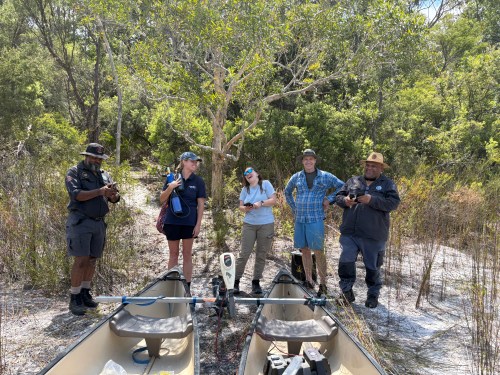
Conway (BAC), Caitlin (BMRG), Margaux and John (University of Adelaide) and Bob (BAC) lakeside (Photo: BMRG) 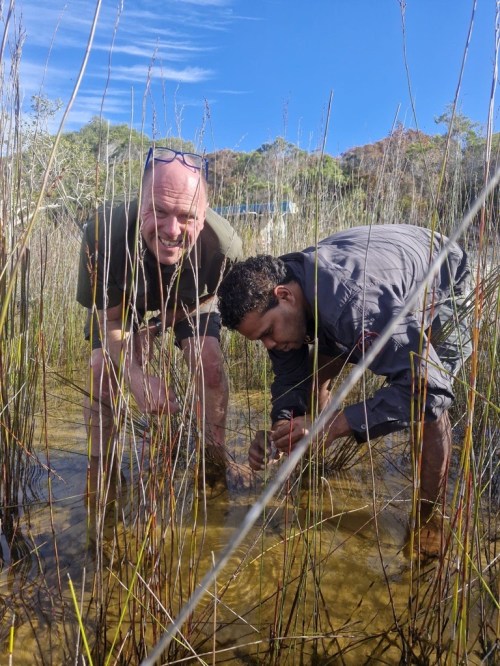
John (University of Adelaide) and Jason (BAC) collecing diatom samples (Photo: BMRG) 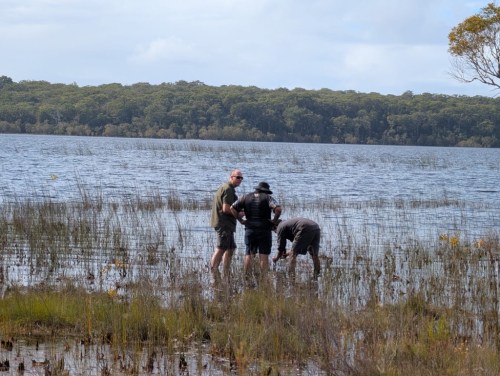
John (University of Adelaide), Kodi and Jason (BAC) diatom sampling (Photo: Harald Hofmann) 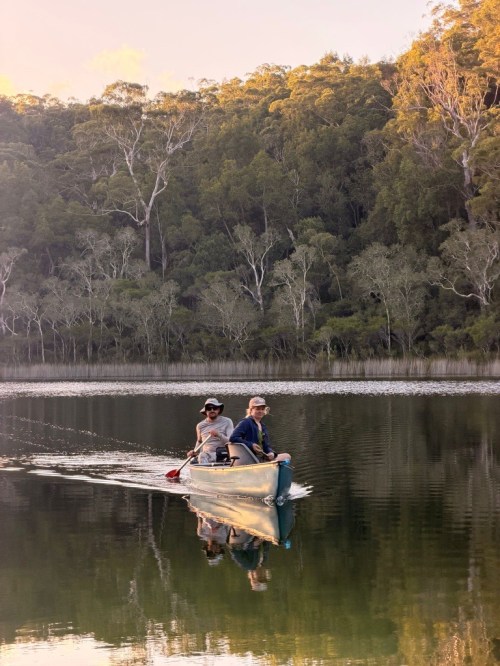
David (BMRG) and Serayah (University of Adelaide) coast in the bathymetry canoe (Photo: Margaux Dupuy) 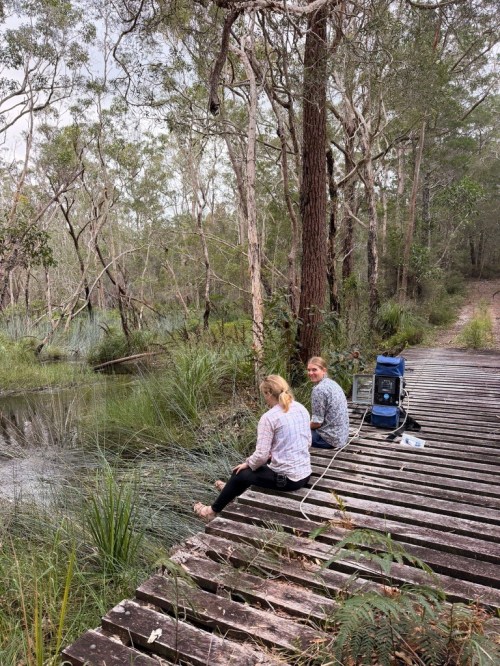
Serayah (University of Adelaide) and Caitlin (BMRG) collecting eDNA from Wanggoolba Creek (Photo: Margaux Dupuy) 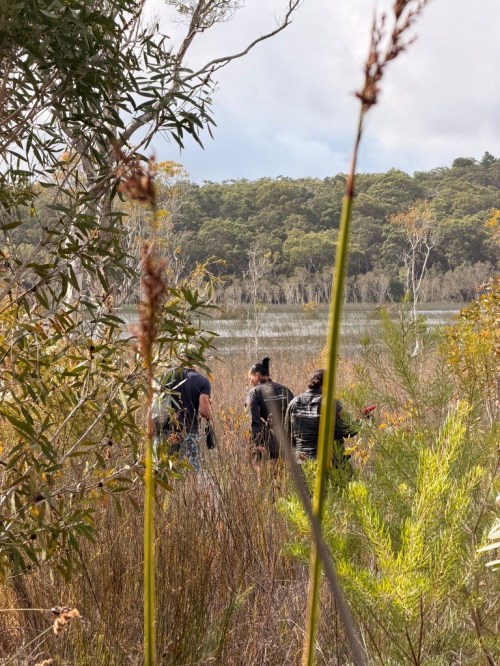
Harald (CSIRO), Jodie and Nat (BAC) collect water samples at White Lake (Photo: Margaux Dupuy)
On Country
The project recently concluded its final field campaign under the current funding, with partners undertaking water quality monitoring of selected lakes and creek sites, including several culturally significant Men’s and Women’s sites monitored in partnership with BAC. These surveys provide valuable long-term data to improve understanding of how K’gari’s freshwater systems respond to seasonal variation and changing environmental conditions.
The program also included extensive creek sampling for high-resolution geochemical and stable isotope analyses to investigate the connections between rainfall, groundwater, lakes and creeks.
Environmental DNA (eDNA) samples collected from lakes and creeks will further improve understanding of biodiversity by identifying fish, other vertebrates, plants and microorganisms present within the island’s freshwater ecosystems.
Beyond water quality, researchers continued a range of hydrological investigations, including bathymetric surveys to produce detailed underwater maps of selected lakes. These data allow researchers to estimate lake storage under different water level scenarios and are critical for understanding how lakes may respond to drought and future climate change. Sediment cores collected from several lakes will also help infer thousands of years of environmental history, providing valuable insights into the long-term resilience of these globally significant freshwater ecosystems.
The field team also serviced K’gari’s growing network of long-term monitoring infrastructure, including lake level loggers, groundwater monitoring bores and weather stations. Together, these datasets are supporting the development of lake water balance models and improving understanding of groundwater–surface water interactions across the island.
Looking Ahead
Following the field campaign, project partners came together for a workshop to share emerging findings, reflect on the achievements of the past two years and identify priorities for future collaboration. BAC presented its long-term vision for water management on K’gari, with discussions reinforcing the importance of Indigenous-led co-stewardship, continued collaboration and ensuring Traditional Knowledge remains central to future decision-making.
Partners identified several priorities for future work, including supporting BAC-led water quality monitoring, improving data sharing, strengthening aquatic biosecurity monitoring, developing water quality guidelines and progressing groundwater modelling and climate resilience research.
Importantly, participants agreed that the collaboration should continue beyond the current funding. Regular partner meetings, ongoing knowledge sharing and joint funding opportunities will help maintain momentum while supporting BAC’s long-term vision for caring for K’gari’s freshwater environments.
By bringing together Traditional Knowledge, scientific expertise and on-ground management, the consortium is laying the foundations for a long-term freshwater monitoring program that will support informed water management while protecting K’gari’s unique freshwater ecosystems and their enduring cultural values.
Article contributed by K’gari Water Consortium

