News

This one’s for the birds…
During the first field trip by the Maryborough and Bundaberg Wildlife Branches to Fraser Island (K’gari) in November 1968, in 24 hours the group positively identified 65 species of birds. Admittedly, the trip was led by outstanding naturalist and keen birdo, Eric Zillman.

The final straw – a subject for deflation
Stranded wildlife is continually washed up on coastal and island regions throughout the state and a routine part of coastal ranger business. A variety of species, from marine mammals, turtles and birds, are routinely recorded by QPWS staff and volunteers. In most instances this allows for reporting of cause and trends to advise management of best possible practice and influence legislation, such as concerning go slow zones and fisheries.
Fraser Island Repository
The Fraser Island Repository is a project of the University of the Sunshine Coast (USC). The collection will, for the first time, gather in one place dispersed material relating to Fraser Island, particularly that held in government departments.
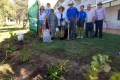
A little landscaping improves the natural integrity
Back in 2011, FINIA had a dilemma about how to use the nursery-raised plants using island genetic stock that needed planting out. It was resolved to plant them at the western entrance to Eurong as a demonstration garden. (more…)
We’re going to be archived!
In March 2017, FINIA was contacted by the State Library of Queensland for permission to archive the FINIA Fraser Island Natural Integrity Alliance website https://finia.org.au/
The State Library of Queensland aims to build a comprehensive collection of Queensland publications to ensure the availability of our documentary heritage both now and in the future. The State Library’s commitment to preserving the documentary heritage of our state extends to contemporary electronic resources, including online publications and websites of lasting significance. This is achieved through participation in PANDORA, Australia’s web archive. (more…)

FINIA Meeting held on Fraser Island (K’gari)
The March 2017 FINIA meeting, which was on held on Fraser Island, provided an excellent opportunity for the members of FINIA to see first-hand the work being undertaken on the island by teams of FIDO volunteers (supported by BMRG through funding from the Australian Government’s National Landcare Programme), the Fraser Island Association [FIA], and the Fraser Coast Regional Council with the support of Queensland Parks & Wildlife Service. (more…)

Postans’ Logging Camp Revisited
A visit to Postans’ Logging Camp by the Fraser Island World Heritage Advisory Committees in early March was a glimpse for many into the logging heritage of Fraser Island (K’gari). John Sinclair relates his memories of Postans in the 1950’s.
My first real opportunity to explore Fraser Island came to me in January 1958. This was my first time to visit Postans Camp. I was helping to trans-ship a load of recycled timber for Maryborough builder Len McConnell (aka Rockem) to the Poyungan Valley on the “Back Beach.” Rockem had chartered Andrew Postans to take the timber from Urangan to and across the island to his house under construction. Rockem needed labour and I needed a break from service station work prior to returning to Gatton College.
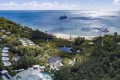
Ships Ahoy! Research to Focus on Cruise Tourism
Cruise tourism has witnessed unprecedented growth rates amidst greater interest in terms of new destinations and ships with an impressive array of features. There is some agreement within industry that the sector is likely to continue its growth trajectory given that many cruise tourists are sold to the idea of all-inclusive and value-based pricing strategies employed by many operators. (more…)

Visiting Chinese World Heritage Sites
China has many more World Heritage sites than does Australia. Most, like the Forbidden City, Great Wall and the Terracotta Warriors, are cultural sites. However, it also has a number of outstanding natural World Heritage sites. With a population exceeding a billion people, who are rapidly gaining greater affluence and the means to travel more widely, there is huge pressure on these World Heritage sites and many lessons that K’gari can benefit from in how this tidal wave of visitation is being handled. (more…)

Monitoring K’gari’s Weather
FIDO has just installed a second online weather station on K’gari at Eurong as part of an ongoing FIDO program to capture weather data from a broader area to assist in environmental monitoring. Through FIDO’s website, anyone in the world with access to the internet can see the temperature, barometric pressure, wind direction and rainfall at both Happy Valley and Eurong in real time and for the previous 14 days. FIDO also feeds the data to Weather Underground and the Bureau of Meteorology, where it can also be seen. They also add FIDO’s weather station input to their permanent storage.
 FINIA
FINIA 