The K’gari Research Cluster was formed in response to a recognised need for a more coordinated approach to research on K’gari. The idea is to bring researchers together with the island’s stakeholders and land managers, including universities, Butchulla knowledge holders and Citizen Scientists.
Cluster members represent a range of disciplines from within UniSC, other universities (nationally and internationally), along with stakeholders including Traditional Owners, government and community groups. Researchers work alongside the Butchulla community, national and international partners in research that spans ecology, climate science, Indigenous knowledge, creative practice, law, education and environmental management.
The K’gari Research Cluster aims to integrate research activities focused on K’gari’s World Heritage values, its Biosphere status, and the rich, enduring Butchulla culture and cultural heritage. The Research Cluster will also support the biennial K’gari Conference (hosted by the University of the Sunshine Coast) and the K’gari Research Archive.
UniSC’s K’gari Research Station, one of only a few research stations located on a World Heritage-listed island, globally, offers an exceptional base for Cluster-aligned research.
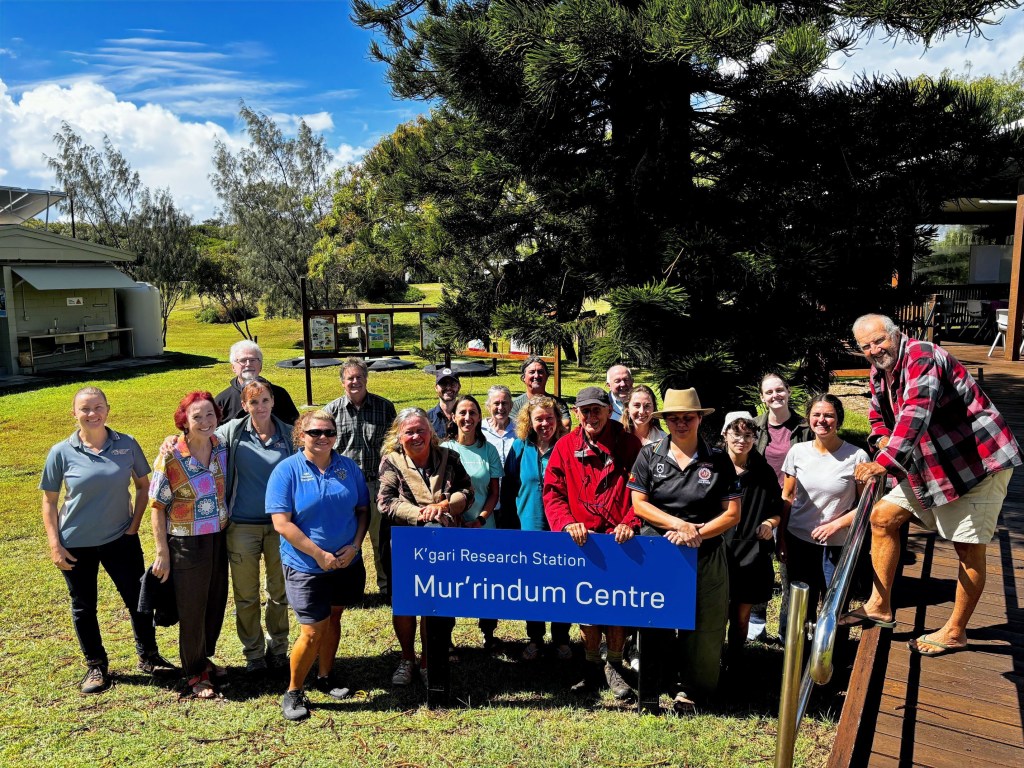
The Cluster Workshop was the first significant event for the Cluster, held at UniSC’s K’gari Research Station on the 20-22 April this year, with 24 participants, including UniSC and QUT researchers and students, Traditional Owners, Queensland Parks and Wildlife Service, FINIA and FIDO.
The key aims of the workshop were:
- Exploring opportunities
- Setting research priorities
- Development of a collaborative research action plan.
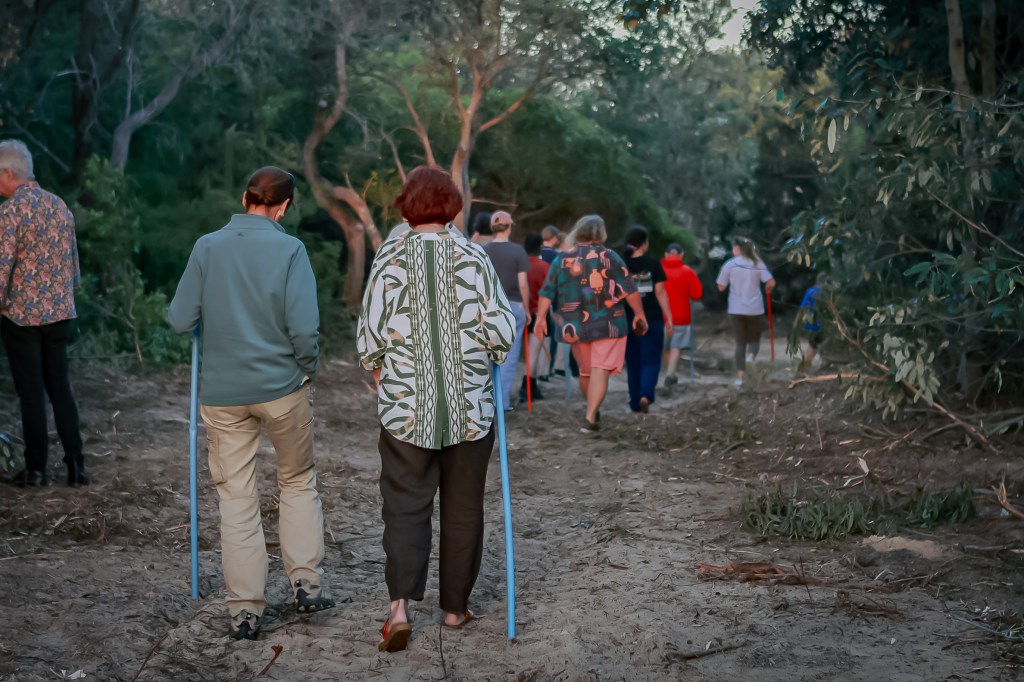
The program included presentations from the Butchulla community and the Queensland Parks and Wildlife Service. Included in the program were workshops and a field trip.
Key outcomes included an integrated, Butchulla-led approach to caring for Country by combining cultural knowledge and science to strengthen ecosystem health and resilience.
Research priorities included healthy water and wetland systems, cultural knowledge and rights, cultural fire management, climate change adaptation and the protection of terrestrial ecosystems and biodiversity. Strong emphasis was placed on coordinated, accountable research that supports decision‑making, reduces duplication and delivers tangible benefits back to Country.
Across all areas, the significance of enduring partnerships, capacity building for future generations and cross‑cutting principles of cultural safety, reciprocity and practical outcomes was reinforced.
Article contributed by Dr Kim Walker, University of the Sunshine Coast

