Invasive weeds are one of the major threats to the health of native ecosystems. Introduced plants can often out-compete native species when released into the environment and form extensive areas which are of little value to local insects, birds, and animals. Controlling invasive plants on the Unallocated State Lands (USL) of K’gari has taken up a great deal of FIDO’s energy and resources since their first trip in 2002.
Weeding also takes a great deal of energy and resources by community volunteers and natural resource management groups on mainland areas of Butchulla Country, which includes Maryborough, Hervey Bay, and surrounding villages as well as K’gari. Ater experiencing the large volume of weeds removed by FIDO volunteers and mainland weeding teams, surely there was a better use for all this biomass than dumping it at the tip.
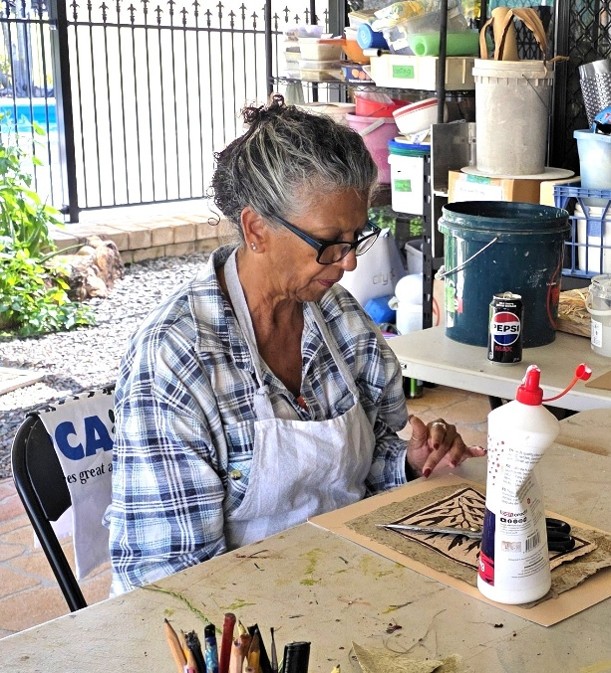
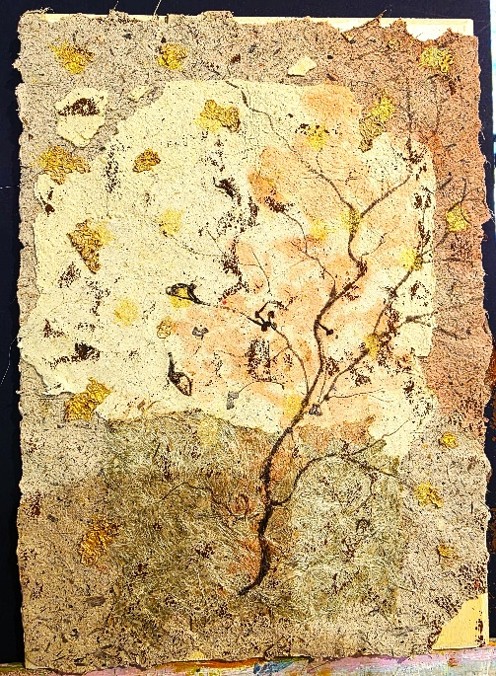
In April 2024, Zela did a workshop with Winsome Jobling, a papermaker from the Northern Territory who collaborates with Aboriginal rangers in Arnhem land (Arnhem Djurra) converting an invasive weed, Gamba grass, into paper. This inspired Zela to undertake a project to turn K’gari weeds into botanical paper, with the aim of producing sustainable mementos or souvenirs which raise funds for biosecurity programs. Her workshops also provide skills and training for local people, offering an exciting new eco-tourism experience.
In 2024, partnering with Butchulla Native Title Aboriginal Corporation, Zela delivered a series of eight full day workshops supported by an RADF grant to investigate the feasibility of making paper from the weeds removed by weeding teams.
Further workshops covered ways to use the botanical paper including stamping, lino-printing, binding artist books and making sculpted 3D cast paper artworks. Results were so effective that Zela applied to Hervey Bay Regional Gallery for a group exhibition.
Artworks made from weed paper were displayed in the gallery throughout December 2025 and January 2026 with the exhibition seen by thousands of visitors during the holiday season. Gallery staff reported considerable interest from the public.
Another aspect of the partnership with Fraser Coast Regional Council saw them supplying the gallery with 200 booklets on how to avoid growing noxious weeds and offering local native alternatives. All were taken by gallery visitors, contributing to another of FIDO’s goals: public education.
Article contributed by Zela Bissett, FIDO

