Introduced from Hawaii in June 1935, cane toads reached the Fraser Coast and Maryborough region in the early 1940s as they spread down the coastline from the Bureau of Sugar Experiment Stations release sites in North Queensland.
Long-term residents and visitors to the island, including the late John Sinclair’s sister, Margaret, remember first seeing cane toads on K’gari in the late 1960s.
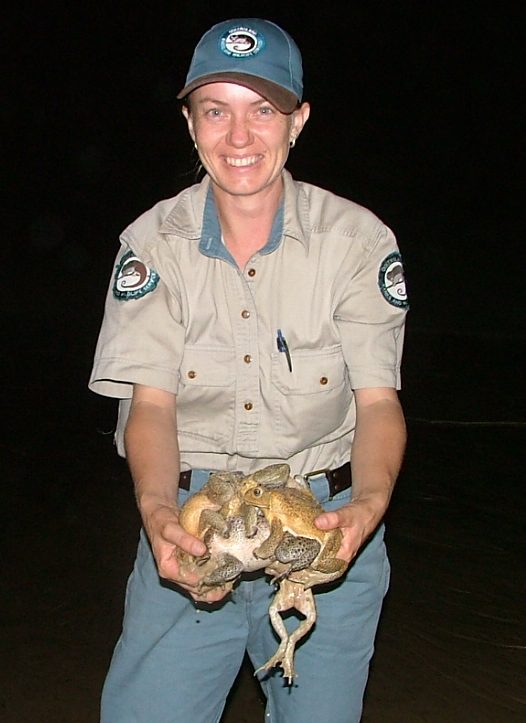
FINIA first participated in cane toad control in 2015, inviting the University of Sydney to deliver a workshop on K’gari focusing on the collection of Bufotoxin and its use as a lure for cane toad tadpoles. A decade on, the technology has progressed to a commercially available BufoTab courtesy of the University of Queensland, now marketed by WaterGum.
Cane toads are now spread across large areas of the island where they wreak havoc with native wildlife. They eat almost anything they can catch and swallow, consuming up to 200 food items a night, including insects, bees, ants, small reptiles, small mammals, crustaceans and native frogs. They outcompete native animals for habitat, and although they prefer moist habitats (wetlands, drains and agricultural lands), they can survive losing up to 50% of their body fluid. Animals that bite or swallow adult toads (like K’gari’s death adder and goannas) suffer rapid heart failure and death. Over 90% of local predator populations crashed upon toad arrival.
Led by Queensland Parks and Wildlife Service (QPWS), FINIA partners recently met to discuss collaborative cane toad management on K’gari. The team accepts that, with current methods, cane toads will not be eradicated on K’gari. However, targeted cane toad management reduces pressure on native species and buys affected wildlife some time. After all, it was only 11 years ago that we first trialled Bufotoxin.
Anyone can participate, either by reporting where they see cane toads on K’gari (both tadpoles and adults) on FeralScan or by joining the K’gari Cane Toad Watch group to allow data to be aggregated to provide a clearer picture and identification of cane toad hotspots.
Partners in the project include QPWS, Department of Natural Resources (Unallocated State Lands), Fraser Coast Council, Butchulla Aboriginal Corporation, FIDO, the University of the Sunshine Coast’s K’gari Research Station, and Sandy Cape Lighthouse Conservation Association.
Article contributed by Sue Sargent, FINIA

