The innocent-looking Singapore Daisy (Sphagneticola trilobata) is a significant threat to Queensland’s coastal and island ecosystems. Originally sold as a garden ornamental and erosion controller, this fast-growing weed outcompetes native vegetation, smothers seedlings, and reduces local biodiversity by forming dense, impenetrable mats.
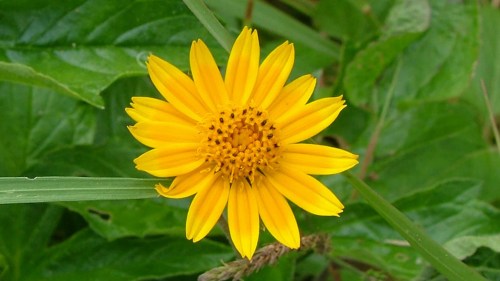
Significantly invasive Singapore Daisy is gaining a hold on K’gari (Photo: Shelton Navie) 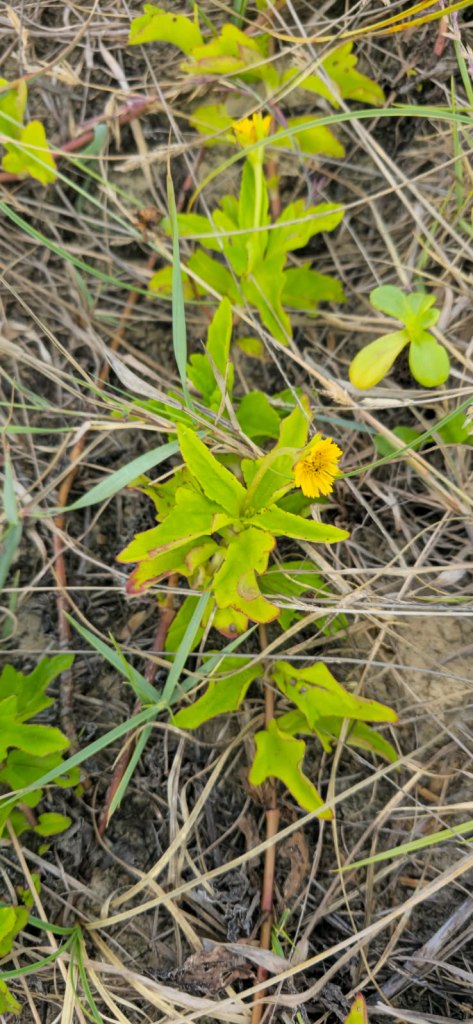
Opposite tri-lobed leaves on a Singapore daisy plant (Photo: Luke Barrowcliffe) 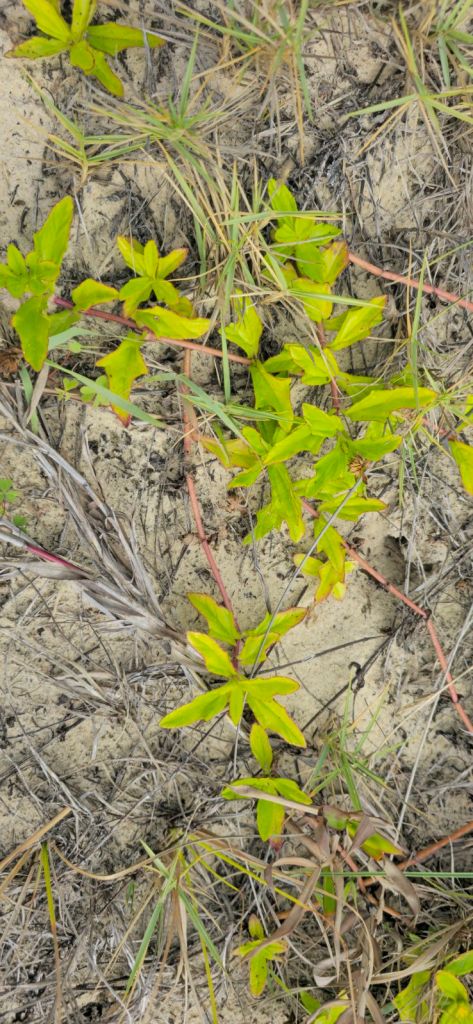
The plant speads directly along the stem putting down new roots at every node (Photo: Luke Barrowcliffe) 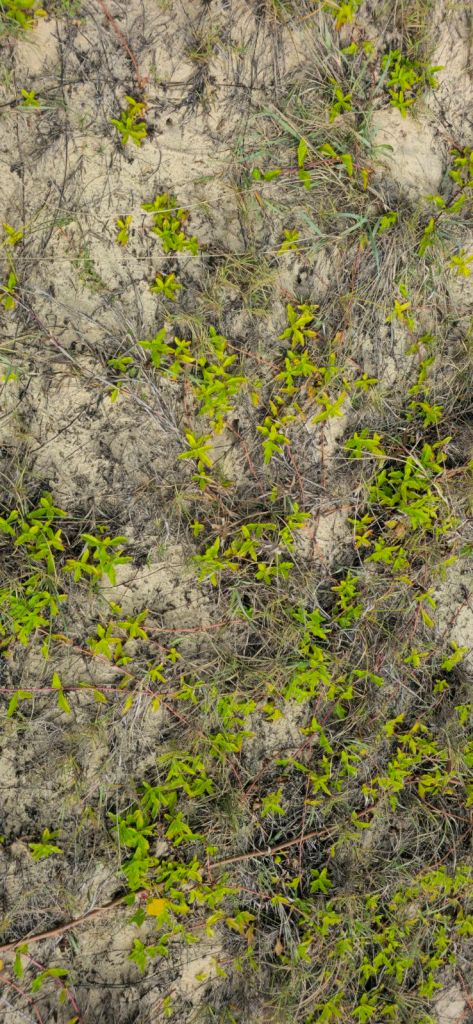
Hand-removing Singapore daisy is probably not an option as the roots fragment and spread (Photo: Luke Barrowcliffe) 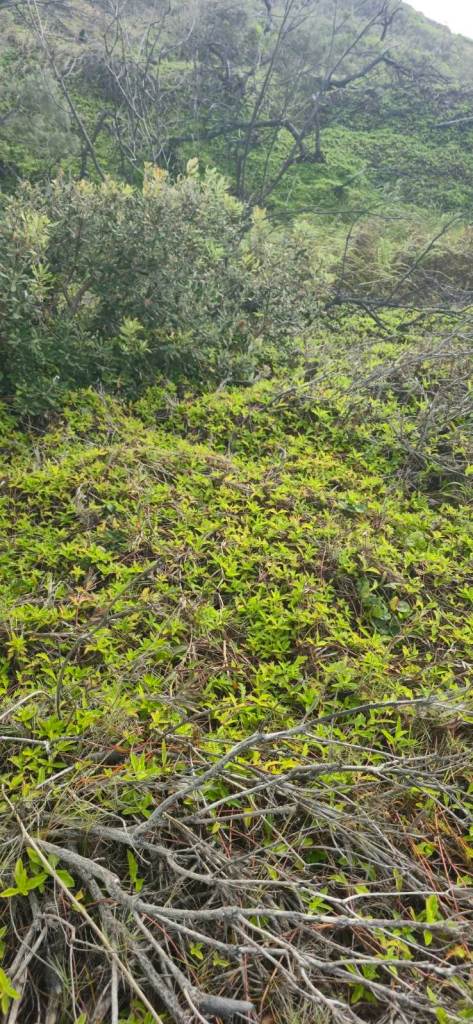
Singapore daisy can spread at a rate of up to 1m a week (Photo: Luke Barrowcliffe) 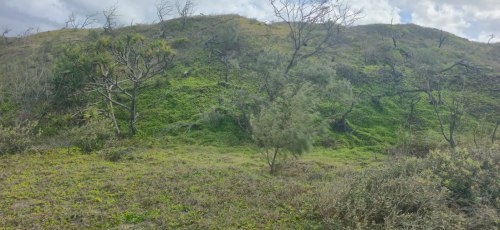
Singapore daisy favours disturbed soils particularly foreshores areas burned in the 2020 bushfires (Photo: Luke Barrowcliffe)
The Silent Invader
While it boasts cheerful, bright yellow flowers, the Singapore Daisy is listed as one of the world’s 100 worst invasive species. On our Queensland islands, this prostrate vine can spread at an alarming rate of up to one meter per week. It thrives in coastal environments, invading foredunes, creek banks, and disturbed bushland.
Singapore Daisy is present on K’gari. The weed is expanding rapidly on the island’s East Coast, particularly in foreshore areas that were severely burned during the 2020 bushfire. As an example, one of the larger outbreaks can currently be found stretching from the Maheno to the Pinnacles (behind the dunes).
Why It’s a Problem for K’gari
- Smothers Native Plants: It forms dense mats that block sunlight, preventing native seedlings and grasses from regenerating.
- Wildlife Barrier: The thick, tangled groundcover physically impedes the movement of smaller native animals and insects including the threatened, Black-breasted button-quail (Turnix melanogaster).
- Erosion Risks: Although initially planted to stabilize soil, during heavy rains or floods, these mats can lift, leaving dunes and banks bare and increasing the risk of erosion.
How To Recognise It
Look for a distinctive three-lobed leaf shape (like a trident or a duck’s foot). They are lush, glossy, bright green on top, mostly hairless, and have coarsely toothed edges. When crushed, the leaves release a distinct, unpleasant odour similar to celery. Leaves grow in opposite pairs directly along the stem which are smooth or slightly hairy, green to reddish, and aggressively root at every node (joint) that touches the ground. Bright yellow-orange daisies (about 2–3 cm wide) grow singly on a single stalk held above the leaves with flowering generally Spring to Autumn (although these can be found throughout the year).
How We Can Manage It
The Singapore Daisy is a Category 3 restricted invasive plant under the Queensland Biosecurity Act 2014. This means it is illegal to sell, give away, or knowingly release it into the environment. If you spot this aggressive weed on your property, you can take these steps:
- Hand-Pulling: Carefully dig up all roots and runners. The plant will regenerate from the smallest stem fragment, so please ensure all nodes are removed.
- Herbicide: The weed can also be controlled by herbicides – for more information please check out Biosecurity Queensland’s fact sheet.
- Prevent inadvertent spread: Because it easily resprouts from cuttings, do not leave it on the ground or put it in standard green waste. Bag it, sealing the matter in black plastic and leave it in the sun until any vegetative material being disposed has decomposed.
- Disposal: Dispose of it at your designated local waste facility or bury it deeply to ensure any seeds or vegetative material being disposed of cannot grow.
- Revegetation: Singapore Daisy thrives in bare, disturbed soil. When removing Singapore Daisy in your garden or natural area, have native plants ready to replace to prevent the weed from bouncing back.
By tackling Singapore Daisy, we can help protect K’gari’s plants, animals and ecosystems.
Article compiled by Sue Sargent, FINIA

